
by Sangeetha Vallat | Jul 20, 2025 | Musings, Today's Katha
This was a blog post I wrote in August 2019. Teacher’s Day was around the corner, and I was feeling nostalgic about the calling I had misread. Dedicated to all the outstanding educators.
TO TEACH OR NOT TO TEACH.
I, too, had a dream, an ambition during my growing-up years. To be a Teacher ….an English teacher. We all love our English teacher more than the other subject teachers, don’t we?! Although some of us might be strong in numbers or the world of experiments or analyzing our past, most of us would be decent enough in the languages (or so we thought, having hardly studied for it during the exams), especially the Language given to us by the British.
My favourite game in my growing-up years was the “teacher game”. In a make-believe sari and a stick in hand, I zealously recited rhymes and stories to my collection of dolls and my dad. Yes, Achan sat in line with my dolls with a pencil and a notebook. I had colourful chalk pieces to write on the wooden doors of my Air Force quarters. I dusted off the chalk marks after playtime, and I never sullied the walls. My Achan was the best student in my class. He put up with all of my idiosyncrasies throughout, always. I would beat him, give him spelling tests, and assign homework.
An English teacher is someone who is well-dressed and speaks politely, and never punishes (mainly); all in all, they are loved by every student. This has been my understanding since my school days. I recently read about an English Teacher in a Government school near Chennai who was so loved by his students that they, along with their parents, refused to let him go on transfer; social media was abuzz with it. As I aspired to be an impactful teacher, I decided to pursue my degree in English literature (the railway job was in my future, but still, one could dream), another impetus being the introduction to good literature. I enjoyed reading the books in the prescribed syllabus…Shakespeare, Dante, Bernard Shaw, Milton, Hemingway, and their ilk. Poetry was not my strong point; I fell in love with the Drama paper. Shakespeare’s “Comedy of Errors”, Arthur Miller’s “The Death of a Salesman”, Oscar Wilde’s “The Importance of Being Earnest”, Tennessee Williams’ “The Glass Menagerie”, so many movies have been inspired by these, and when I recognise the sequence in a film that mirrors these books I whistle joyfully!
Never had the good fortune of studying under an inspiring special teacher, but the ambition stayed on. I remember being mesmerised by my English Professor during my degree correspondence classes. (Pity that I couldn’t join a regular college as I was waiting for my railway posting orders). What diction and a baritone voice. He made even the dry subjects enjoyable. I was proud because he always picked me out from the crowd to read passages aloud to the class. I remember having difficulty pronouncing “ecclesiastical,” and he smiled (I melted!) and gently corrected me. I can understand why students fall in love with their professors, especially the English teachers who sweep you off your feet, mouthing Shakespeare and Wilde!! Hah…I digress.
With great fortitude, I took on the task of tutoring the neighborhood kids alongside a Kendriya Vidyalaya mathematics teacher (he was the Teacher, and I was his assistant). This teacher wanted an assistant to handle English and Social Sciences. I liked these subjects and accepted his offer. I put my heart and soul into imparting knowledge to young minds. After a month, my employer asked me to teach Sanskrit to the students.
I was aghast and told him, “But I never studied Sanskrit in school.”
“You know Hindi? Sanskrit is similar. Add a couple of dots to the script. You can do it, browse through their books, it’s easy, I have been taking classes like that only.”
I reluctantly took on the extra role, poring through textbooks trying to learn Sanskrit and then teach the students. Our education system was atrocious; teachers managed any subject and any grade.
I was punctual in the tuition, prepared notes, and was gentle with the students. They never took me seriously and played pranks on me, and the primary teacher also started taking tuition elsewhere, leaving these students under my capable tutelage. He would come much later, give them sums, summarise experiments, and rush to another home tuition centre. I was distressed to see the mark sheets at the end of my third month of teaching. Almost all of my students failed to secure ‘pass’ marks. I had even managed to get a LKG kid to fail in her examinations. Was that even possible? Can they detain a young child? This was a motherless girl, Kayalvizhi, thin and dark but highly spirited. She sat on my lap during the tuition class.
Her dad oiled her hair, tied it into pigtails, powdered her face, and drew a black star on her forehead. Soon, he was to bring her a new mom, and I prayed that she wouldn’t come between the father-daughter love.
There was another adolescent Pandi, whose father worked in my Achan’s department. Pandi was the naughtiest and the lousiest in studies. But he was my favourite. He failed in all subjects. Before I joined, he had passed in at least a few subjects. Invariably, everyone failed in Sanskrit.
I told my employer that what he was doing was wrong. Either he should be present in this centre for the whole duration of classes, or hire a better assistant who knows how to handle the students. I resigned, and he left the students unattended. I watched the children playing in the park during classes.
Not ready to accept my failure (yet), I joined as a teacher in a nearby school. My Amma said that perhaps I would do better in a classroom or school situation. She reasoned that these tuition kids were beyond repair and not my fault (A mother’s logic). Actually, in those days, it was true that only children who needed extra assistance attended tuition, unlike nowadays, when even the brightest attend tuition. It’s become a matter of pride. My neighbour, who worked at a nearby school, took pity on me, as I was bored waiting for my posting letter from the Railways. I was instructed to come prepared with a “Rhyme” for kindergarten, as the principal wanted to test my teaching skills. Racking my brains, I selected a simple rhyme that would be easy to enact. Armed with dancing moves (Tu cheez badi hai mast was the top of the chart in those days!) and jumping tricks, I addressed my class of tiny tots, who were measuring me with eyes wide with bewilderment. I felt trapped like a zoo animal. They waited to see rabbits fly out of my bag.
As the cue for action came from the principal, I was on, guns blazing. Hickory Dickory Dock (I was doing the Akshay Kumar hand movements), and then mayhem ensued. I was perplexed at the cries and shrieks of “miss he is pushing me “, “miss she’s biting her”, “miss I want my mommy”.
Complete pandemonium, and I was sweating and swearing. With kids pulling my dress and climbing onto me, I looked at the principal with a silent cry for help, who concluded that tiny tots were a burden on me (I still am incapable of handling kids). Not wanting to discourage me, she decided to give me a chance with the older kids.
I was the class teacher for grade 2 students, who were better behaved. They showered me with so much love. I revelled in their adulation. I was famous and impactful within a day. The principal called me over and mildly chastised me for using “yeah” instead of “yes,” as the whole school was chanting “yeah” fervently (this was in 1995, when casual slang wasn’t acceptable in a formal setting). I grinned and answered “yeah” and left the room.
The third day dawned fresh, and I reached the school in a yellow organza sari. Young girls often admire and compliment their teachers on their clothes. I had started wearing saris to school because the principal said otherwise, I looked like a school kid myself. These saris were borrowed from my Amma and a cousin. School was a breeze till noon. My energy waned by the time the sun was overhead, with continuous classes and homework corrections, with not a free period. I was tasked with an additional responsibility to handle the grade 6 brats as their teacher had an emergency. The kids were so tall, I felt like a Lilliputian! My zeal and enthusiasm ebbed, exhaustion kicked in, and I was unable to cope with the Herculean task of standing on my feet, hollering at the kids. I, a frail woman (many eons ago), fainted in class, mid-sentence, and was sent home in a cycle rickshaw. What a bathetic conclusion!
I sent my resignation through the neighbour and was pleasantly surprised when the principal requested that I come as a part-time teacher at least, such was my impact! Realisation struck that I was not cut out for TEACHING and it was not my calling. And not wanting to risk the future generations, I called it Quits!! I should have realised this when I narrowly missed being born on Teacher’s Day!
Salute to the teachers who continue to inspire and mould young minds!!!
P.S. The unrequited dream still affects me, and I don the teacher’s robe at times with my spouse. He calls me “question paper”!!
Photo – Unsplash Haseeb Modi
by Sangeetha Vallat | Jul 11, 2025 | Musings, Today's Katha
11 July 2025. My mom was my first friend. Growing up as a single child, I shared every thought, every detail of my life with my mom. The habit continues. As Oscar Wilde said, “Every woman becomes their mother…” Much to my delight and consternation, I can see that I am slowly transitioning into my mother. Hopefully, I will beget her strength and fortitude.
Finding Strength in Solitude: Voice Notes and Balcony Views.
When my father passed away in 2018, the silence he left behind felt deafening. As I prepared to return to Dubai, I asked my mother to come with me, just for a few months, to heal. But she surprised me with a quiet strength I hadn’t anticipated.
“No,” she said gently. “I’ll come later. I need to get used to being alone. Dubai will only be a temporary escape. If I go now and return to an empty home, it will be unbearable.”
Her clarity stunned me. I understood her reasoning and chose not to let others influence me with their well-meaning but intrusive suggestions and chorus of opinions: “Don’t leave her alone!”, “Why not stay longer?”, “This is what happens when children live abroad…” I trusted her instinct. She knew what she needed, and I respected that. I had to return to Dubai, to Sujith, and our life. And life, inevitably, had to move on.
Today, my mother lives alone in Chennai. We visit each other as often as we can, alternating between her home and ours in Dubai. We’ve even enjoyed a couple of mother-daughter vacations, where the roles subtly reversed, she, the curious child, and I, the protective parent.
Her daily voice messages are a constant in my life. They arrive in waves, updates, thoughts, musings from her day. When I’m in the middle of writing or caught up with chores, the barrage of messages can feel intrusive. I’ll play her voice in the background while doing something else, only to hear her ask later, “Why haven’t you replied?” I’ve snapped, said things I shouldn’t have, and quickly regretted it. Thankfully, neither of us lets such moments fester. We vent, move on, and return to everyday conversation, never letting arguments grow into monsters.
One of her favorite pastimes is sitting on the balcony of her 14th-floor apartment, watching life unfold below. Five years ago, one doctor insisted she needed immediate cataract surgery. Another said she didn’t have cataracts at all. Either way, she seems to have better eyesight than I do!
Every day, she narrates what she sees, a running commentary of everything she sees: a toddler wobbling around under a grandmother’s watchful eye, a mother escorting her daughter to tennis class while balancing twin toddlers on her hips, the eldest child dragging a tennis racquet behind. The occasional police jeeps or ambulances in the complex. She clicks pictures of the monkeys hanging on the door grill or prancing on the terrace and recounts their antics, all the while laughing uncontrollably. The area was once a mango orchard, but the trees were felled to make way for the high-rise apartments. So, the monkeys were in their habitat and refused to move away. Yesterday, she was particularly animated. The colleges have reopened, and our apartment complex, which sits beside a university, is buzzing again. Students are back, hanging around in groups, chatting, laughing, revving up their bikes. “The college kids are back!” she beamed. “It’s so lively! Remember that Prabhu Deva song about April and May! I feel exactly the same.”
I didn’t know whether to laugh or admire her joy. This childlike enthusiasm, this ability to find delight in the everyday, is her superpower. Living alone at her age isn’t something most would recommend, but she does it with grace, strength, and a sense of wonder that keeps her going.
She has taught me that healing doesn’t always come from company or distraction. Sometimes, it comes from sitting still, looking out from a balcony, and learning to be okay with your own company.
by Sangeetha Vallat | Jul 9, 2025 | Musings, Today's Katha
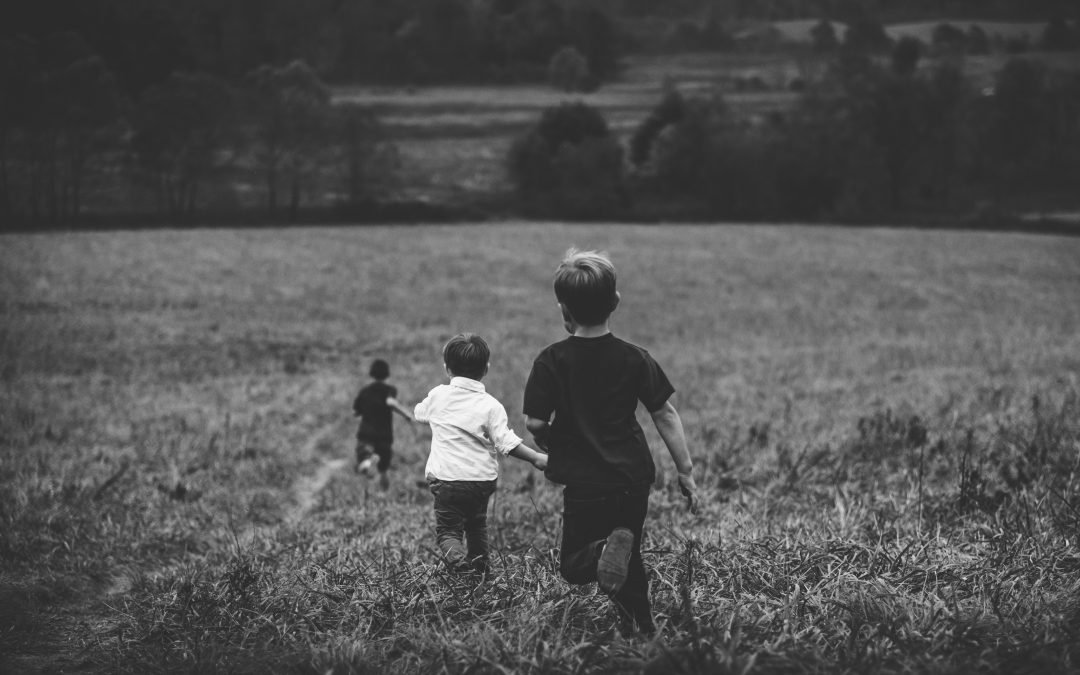
I wrote this blog post in June 2019. Growing up as a single child, I looked forward to summer vacations where I could meet my cousins. We had such fun; indeed, they were golden days. Don’t you all have cherished memories of holidays with cousins?
Those Golden Days
Cousins are often our first friends, and I was blessed with a truckload of the very best. Born into a sprawling family on both my maternal and paternal sides, I have a lifetime of memories etched into my ever-fading memory bank. As an only child, my summers were a season of joy, spent soaking up the essence of siblinghood with my cousins.
Growing up in the city, everything felt like it belonged to someone: mine, yours, his, hers. But stepping into our ancestral home, or tharavad, was a different story. There, everything was ours. The extensive landscape, the food on the table, the toys, the books, nothing had a single owner, and that’s what made it magical. With my Achan being one of 12 siblings and Amma one of 7, I had no shortage of cousins to bond with.
Summer vacations were split evenly, half spent in my mom’s tharavad, where only my grandparents lived, and the other half at my dad’s tharavad, where cousins from Bangalore would descend. My mom’s side of the family lived in Chennai, and we often met there. In the first half of my vacation, I read books, played with the neighbours and engaged in conversations with old people. There was a respected older man of our family who encouraged my outspokenness and chuckled at my stories. Although I enjoyed the quietness here, it was the second half of my vacation that I genuinely looked forward to. Achan’s home was always overflowing with aunts, uncles, cousins, and the gentle contrast between my tall, stoic grandfather and my petite, ever-smiling grandmother. Yet somehow, there was always room for everyone.
This tharavad sat in splendid isolation, overlooking an endless expanse of paddy fields. After harvest, the brown sun-baked fields would turn into our playground. If harvest was delayed, we pranced around the green paddy fields, taking care not to fall and damage the crops. Nature was our constant companion, with the whir of crickets, the croaking of frogs, shiny beetles buzzing toward tube lights, and even the occasional snake.
Mornings began with open-air chatter as we brushed our teeth under coconut trees, painting the ground white with foam. We’d collect fallen mangoes in the backyard, though grandma never stopped feeding us plate after plate of sliced mangoes. We watched cows being milked, giggled at the odd sensation of their warm, velvety necks, and ran wild under the canopy of trees. Our private pond, overgrown granite steps, and all were a favorite haunt. We’d link hands and wade in together, always under the watchful eyes of an adult. Sometimes we’d venture to the river, a grand expedition involving soaps, clothes, bundles, and a lot of splashing. I still remember the delight of learning to float in the arms of an aunt, even as my delicate skin broke into rashes from the muddy water.
Mealtimes were chaotic. The dining space rang with laughter, noisy banter, and the occasional special treat from a loving aunt, usually shared with a favorite cousin. Everyone had their “person”, an uncle who brought treats from work, an aunt who’d sneak you an extra laddu. My favorite was an uncle who’d ask each of us what we wanted, patiently collecting our long lists and returning with goodies by evening. We’d watch for him from afar, racing down the winding path through the fields to greet him and carry his bags.
Evenings slowly faded into nights filled with long shadows and eerie sounds. I’d cling to my dad, terrified of flying toads and ghost stories. My countryside cousins were braver, unfazed by snakes or frogs, and I admired them immensely. Long walks through the fields were a delight, plucking husked rice grains and gobbling them up as my cousin peeled them one by one. Even today, I can’t resist touching “touch-me-nots” when I spot them, no matter who’s watching.
We explored every nook and cranny of the tharavad, climbing into the attic to stare at the stuffed bull’s heads (some forefathers’ hunting prowess or a beloved pet), sift through dusty books, or admire the wall of wedding photos. We imagined our own wedding pictures joining the ranks one day.
Of course, we had our mischief too. When our unmarried uncles stepped out, we’d sneak into their bachelor quarters to ogle at Debonair, Playboy, and a few local Malayalam magazines, one of us always keeping watch across the fields.
Hide-and-seek was an adventure with so many secret spots to vanish into, sometimes so good we’d fall asleep unnoticed. We played “house,” fashioned bowls from teak leaves, and married each other with flower garlands. Rosary pea,(coral and black beads), “kunnikuru,” were our precious jewels. And oh, the countless trips to “Sajna Musicals” to record our selection of songs onto cassettes. I even befriended a shopkeeper near the bus stop, Chandran, who waited eagerly every summer to hear my wild stories. Even after I started working, I made time to visit him until he passed away a few years ago.
We had a local thatched-roof movie theatre that would restart the film just for us when we arrived late, thanks to my uncle’s popularity! A dozen of us would pile into an auto with snacks packed by grandma….Kerala banana chips and sweet halwa, and giggle our way through the ride. Didn’t we giggle and whisper too much with cousins and friends in our younger days? One cousin, fresh from Bangalore, once wailed for Gold Spot when all the theatre offered was Kappilandi (peanuts) and chaya.
Weddings were frequent and fun in the tharavad. With limited washrooms, a makeshift shed was built near the well. Bathing in pairs to save time often meant more laughter and less bathing. We have photos of all the women wearing the same red lipstick (courtesy of our Bangalore cousin), striking poses with the newlyweds while we expertly photobombed them. I secretly wished my wedding reception would be held right there, in the courtyard, with a paper plate of mixture and a cupcake balanced with a banana.
As we grew older, innocence slowly faded into caution. No more shared baths or hand-holding walks. But the bond only deepened as we whispered our secrets, first crushes, ambitions, and heartbreaks, late into the night.
Time flew. Cousins married, moved, and became parents. The old tharavad eventually crumbled, no more communal ownership, no more central hub. But the love we cousins shared never left.
Now, no matter where we are in the world, when we reunite, we slip right back into those golden days. A glass in hand, smile on our lips, we relive every moment, every prank, every silly fight and secret. We are still that same crazy bunch, just a little older.
P.S. Just got back from a road trip with my cousins, no spouses allowed. And what a riot it was!
Picture Courtesy – Unsplash- Jordan Whitt

by Sangeetha Vallat | Jul 7, 2025 | Musings, Today's Katha
A short version of this was the first write-up, I typed on my mobile phone, lying on the middle berth of the Alleppey Express in January 2018. I have added a few more lines now. It was published in my blog on May 1, 2018.
AMIDST STRANGERS
( A journey to my Achan’s tharavad without him)
Amma and I were packed and ready, waiting for the cab. This trip to Palghat without Achan felt heavy on the heart. We were travelling to his tharavad to do the special rites ceremony at Ivar Madom near his village. Sujith was back in Dubai, and my maternal uncle and cousin would join us at Palakkad later. Perhaps Amma and I should have travelled with them instead of taking this journey. It helped to have people to talk to, so we didn’t dwell on our grief.
Achan was the one who made sure we reached the railway station two hours early, no matter what. It was his thing. So, even though he wasn’t with us this time, we kept the tradition alive and left home well in advance. We reached the station with 90 minutes to spare. The train was already on the platform, but the AC and lights weren’t on yet. Amma and I found a spot on the platform and just sat, taking in the quiet chaos around us: families, vendors, and announcements echoing overhead. It was oddly comforting.
Once we boarded, the coach attendant stepped in and got things going. He deposited bedsheets and blankets on the upper berth. A little later, a tall man arrived with an elderly lady, his mother it seemed, and a little girl, about five years old, trailing behind. They had plenty of luggage and settled into our bay. I couldn’t help but feel a bit anxious; I always get a bit uneasy seeing small kids on overnight trains, fearing a sleepless night. Mostly, I find infants and toddlers neighbouring me during travels or in theatres, which annoys me. When Amma began conversing with them, I stayed aloof but gradually started chatting.
The man was dropping his mother and daughter off at their hometown for the holidays. He was Malayali, born and raised in Kanpur, where his father had served in the Air Force. He spoke fluent Hindi, English, and Malayalam. His daughter, Ruth, was the sweetest, calmest child, a complete relief.
A young couple joined our bay. Ruth’s dad, a friendly man, requested that they swap the upper berth so his daughter could sleep with him in the middle berth, and they happily accepted. There was something easy and unforced about the whole group; we all started talking as if we had known each other for years. Work, life, cities, languages… everything flowed naturally.
As I watched Ruth’s dad fuss over his little girl, a wave of longing washed over me. I missed my Achan. He had always pampered me in his own quiet, wholehearted way. Amma would often recount this one incident that, in her words, summed up just how much he adored me.
I must have been around four years old. The milkman had just delivered fresh milk, and Amma placed the vessel on the table before stepping out to speak with a neighbor. When she returned, the scene horrified her. I was standing on the table, happily tipping the vessel, watching with fascination as the milk spilled over and streamed onto the floor in silky white waves.
What stopped her in her tracks, though, was not just the mess, but the sight of Achan sitting calmly beside me, watching me with a smile on his face and a gleam in his eyes. When Amma shrieked in frustration, he simply said, “Look at her… how happy my Molukutty looks.”
Amma couldn’t see the happiness, only the mess. But Achan… he saw me.
That kind of love, that kind of gentle indulgence, I know I’ll never feel it again. There’s a line from a film that comes back to me often: “Grief is just love with nowhere to go – the leftover love that we don’t get to give….”
And in that moment, it felt painfully true.
Dinner was quiet, each person eating their own packed meal. Then, we all started settling in for the night. The men helped with the berths, and we began winding down. Ruth, all tucked in, softly wished us goodnight. But just as sleep was setting in, she realized her mother wasn’t with her and began to cry.
That sinking feeling hit me, and I braced myself for a long, restless night. But to my surprise, Ruth calmed down quickly and didn’t cause any more trouble. She was a little gem.
At dawn, Amma and I were the first to get off the train. We gathered our luggage quietly while the others were still asleep. It had been a peaceful night, with warm conversations and shared silence.
As we stepped off the train and walked away, we glanced back one last time. There was Ruth’s dad, standing at the door of the coach, smiling and waving goodbye. We waved back, knowing well that we might never cross paths again.
We shared stories, laughter, and kindness. But none of us had exchanged names.
That, perhaps, is the beauty of a train journey: someone who shares a brief, beautiful slice of your life with no strings attached. Just strangers, connected by a train ride, a few stories, and a memory that lingers long after the journey ends. Strangers, now part of your story.
&*&
Picture Courtesy – Unsplash Josh Nezon.