
by Sangeetha Vallat | Aug 15, 2025 | Musings, Today's Katha
I began typing this blog post in my head while I waited inside the US Consulate for the Visa interview on Jun 17. Of course, the actual typing happened much later.
THE VISA GAMES: PASSPORT, PLEASE…
A year ago, on a Saturday, Sujith announced that we would apply for a US and UK visa today. I raised an eyebrow and continued to surf channels. He carried the laptop to the table, plugged it in, and retrieved his spectacles from beneath a book, “The Psychology of Money.” Yes, he juggles between this book and a massive tome, How Prime Ministers Decide – he has been at it for many months. After some 20 minutes on the laptop, I heard his frustration.
“This bloody thing is asking more questions than you!”
Aha, Sujith hated questions. He usually gave me a single yes or no to a string of questions I texted him. The next thing I heard was the sound of his chair scratching against the floor. Off he went to the balcony, dissipating smoke rings in the muggy air.
“Would you come and help me fill these forms? I am not going to travel alone, am I?”
I switched off the TV, swapped my reading glasses, and pulled up a chair beside him. After 2 hours, we submitted the UK visa application. We took the rest of the day off and opened the US visa application on Sunday.
***
The UK visa interview happened within three months, and we received the visa in 21 days. We even took a holiday trip to London and Scotland. A year has passed since we submitted the US visa application, and today was the D-day. We could have checked the availability of an earlier date by logging in regularly, but since we weren’t in any hurry, we left it untouched. 9.15 was our appointment time. 45 km away was the Consulate, a 40-minute drive. I proposed to go by 7:30 am, but at 7:10, I chewed my nails while Sujith clipped his. Sujith invariably clipped his nails, especially on the days he had something important and an appointment to be at. I think it’s his kind of coping mechanism, a relaxation technique that worked for him but frayed my nerves. I mumbled in a very low voice, lest he delay a few minutes in arguments. 7.59, we started our vehicle. By 8.30, when we hit traffic, I began to squirm in my seat, partly due to my overactive bladder. (I seriously should get it checked, absolutely annoying. Oh, how I encountered wild animals in Kenya, due to this, erm, check out my ‘passport pages’ on my website.) The US website clearly stated that parking wasn’t allowed at the Consulate. We argued about where to park and take a cab. I pointed at spots, but he drove on. Then he finally parked on a street near the Consulate. The Etisalat telephone network played truant, and he couldn’t pay the parking fees. I found a payment meter and hailed a taxi while he battled the meter. Taxis didn’t heed me.
“Aren’t you keeping the mobile in the car? You said we couldn’t carry them inside.” I mumbled in exasperation.
He sauntered to our car to stow the mobile, while I shouted ‘Taxi, taxi’ and ran around like a headless chicken. Sujith ambled casually toward me, a cigarette in his hand, and my face revealed my inner thoughts. He asked a Juice shop guy for directions. The Consulate was just around the corner. 500 metres away. We rushed, or rather I rushed, Sujith puffing on his cigarette, sauntering at a steady pace behind me. I saw the signage, United States of America. I felt as if I had landed in the US of A. Already. A security guard asked us to turn right a little ahead. There we met an African American who smiled and said, “Hello, Good morning.”
I panted. He said, “Are you walking from far?”
“Yes, in the hot sun.” It was 47 degrees. He guided us to the walkway to the right, where we spotted a queue of 10 people. We joined them. No separate line for the locals, men garbed in white and women in black, stood with us. Another family from Kerala was ahead of us in the line. I asked Sujith the time- he said 9.10. I said, Nonsense. Show me the watch. It was 9.11. I expelled a whoosh of relief. By 9:25, we were ushered inside for a walk-through of a scanner, and we deposited our car keys. Sujith had to remove his wallet and belt and hoped he would not be asked to remove his shoes. The security asked me, “Your belt, watch?” I said, “Nope. I don’t have a belt, a watch, or a mobile.” He smiled and waved us inside. We sat in an enclosure with others. As the people seated in the front rows were taken inside, we moved forward to the front rows and waited.
“Where was the Komando resort?” I wondered why Sujith asked me this now.
“Maldives.” We had travelled there a few years ago for my birthday.
“What is the capital?”
I was perplexed. “Male. Do you think they are going to ask me GK?”
“I don’t know. What if they ask? What if they reject our visa if you can’t answer such a question?”
This increased my unease. I quizzed Sujith on some countries and their capitals, as well as some international news.
A Lebanese couple (we saw their passport held in their hands), both beautiful with cute little children aged 8 and 6 approximately, were seated in a row ahead. The daughter, 8, was pulling her father’s cheeks, talking, and playing. The boy was clinging to his mom, and they played a game of rock, paper, scissors.
The girl was bored and asked her father, “Papa, where was I before I was born?”
Papa said, “In your mama’s tummy.”
The wife blushed as she chuckled at her husband.
“Mama, was I inside your tummy?”
“Yes, baby.”
“So where was I after I was born?”
“In the hospital.”
“Then?”
The little brother pealed, “At home!”
The sister wasn’t done yet. “Then?”
“In the nursery, then school, now at the US consulate….” Mama continued until the security guard, who had a torch, a walkie-talkie, and a stick clipped to his trousers, guided us inside.
By 9.45, we entered the central area.
I ran to the washroom while Sujith waited in a queue for biometrics. I am like the animals that mark their territory – wherever I go, I have to use the washroom. At counter 9, the lady took our passports and photos, scanned everything, and directed us to counter 13. There, another lady picked up the passports, typed something on her system, and asked us to record our fingerprints. Left four fingers, right four fingers, and both thumbs. While waiting my turn, I watched the large TVs outside the counters, which played a video on a loop. If your fingers aren’t dry, we cannot take your fingerprints. Use the tissues near the counter to dry them. I kept rubbing my hands vigorously on my jeans. We were then asked to sit in the waiting area for the interview. After 10 minutes, we were directed to counter 4.
All the while, at regular intervals since we left home, Sujith has been harping, “I don’t care if they reject the application. We are just trying. It’s ok, not that I am dying for a US visa.” I caught on early that all these were for me, to prepare me for an adverse outcome, because when our Australia visa was rejected in 2016, it cleaved me. I had planned the trip, watched travel videos, booked flights and hotels, and everything was ruined with the rejection letter. So, I nodded to Sujith and said, “You need not be so pessimistic, and I can handle a rejection.” The US was not on top of my travel bucket list, unlike Australia. I had diligently watched every episode of MasterChef Australia and was also more intrigued by the book “Down Under” by Bill Bryson.
The Lebanese family was at counter four before us, and we overheard the kids answering questions. I noticed now that they were in school uniform; perhaps the parents were dropping them off at school after this. The children responded to the questions asked, including their school’s name and the capital of the UAE. The lady inside collected their passports and bid them farewell. Mama said, “Say thank you to her.” The girl said, Thank you. The boy said, Thank you for coming home. The otherwise tense atmosphere in the waiting room lessened a bit as a few of us let out nervous laughter, hearing his remark. All around, every face reflected stress, so many hopes and dreams stiffened their visage. I watched as the faces lit up and people jaunted out joyfully when their passports were collected. Those who had their passports returned trudged, fighting tears.
Then it was our turn.
Sujith dropped the passports into the counter groove. The lady keyed in something and asked, “What’s your purpose of travel?”
The microphone speakers were next to me. Sujith leaned forward, “Come again.”
“Tourism.” I chipped in. Sujith turned towards me, and I touched his arm. I had told him earlier that he should answer all the questions; I would stay mum, because I tend to give a one-page answer to a 2-mark question.
“Do you have friends or relatives in the US?”
“Friends.” Again, I answered.
Sujith guessed the question, “Friends, my schoolmates are there.”
“Where?”
“They are all over the US.”
“Are you going to New Jersey?”
Both of us were puzzled. We answered in unison, “New York.” Sujith had wanted to land at Heathrow in the UK on his first trip, which we did, and JFK, New York, in the US at first.
Sujith continued, “We haven’t planned anything as such. Want to spend New Year’s in New York and maybe visit Florida.” (We overheard a lady answering earlier, Las Vegas.)
I realised I was sucking my cheeks, Florida?! Where did this come from? Oh yeah, his friend had just been to Florida for his son’s graduation, that must have prompted this answer.
Sujith answered where he worked and about his position/compensation. Then, to the question, since when have you been in the UAE? We provided a detailed explanation of our initial entry into this country and our subsequent multiple stays for employment purposes.
“Do you work?” She looked at me.
“No, I am a homemaker. I worked in the Railways in India. Took VRS. I am also an author; my debut book was published a couple of months ago.” We were warming up, and all that I had heard about answering only to the questions asked, not giving extra unasked information, was forgotten. I stopped short of selling her my book, Platform Ticket. In fact, a friend had suggested that I carry a copy and give it to the interviewer.
“That’s nice. Congratulations.”
I flashed a smile.
“Do you have children?”
“No.”
“You will be travelling with friends or just the 2 of you?”
“Just us.”
“Which other countries have you travelled to?”
Ah, we had this under control.
Sujith started, “Srilanka…”
I clenched my jaw. Really? We are starting with the small stuff. How about the bigger countries we have visited? Then it hit me: Sujith was trying to name the places we had visited year by year….Srilanka was our first international holiday destination, but the UAE was our first international trip.
I jutted in, “UK, Kenya…”
“Tanzania.”
“Maldives.”
“Georgia.”
“Thailand.”
She smiled; she liked our united front!
She pushed a green paper and said, “Collect your passports when you receive the email.
Sujith looked at me quizzically. I gushed Thank you, thank you and pulled him away.
“What?”
“Arrey, if they collect the passports, it means the visa is approved.”
“How do you know?”
“I know. I observed the people. I read in a book, too. Chuckle Merry Spin by Khyrunnisa, in the book, she mentions her getting the US visa and her maiden travel to the States.”
“Good, the book proved a lucky read. I will also read it.”
“Yes, it’s a fun read. Perhaps we will reread Bryson before we travel.”
“Anyways, let’s see the passport with the visa to confirm it.”
I exuberantly thanked the security folks and skipped out, collecting our car keys.
“Wait, I will call a taxi. It’s too hot.”
“Nah! Let’s walk. We are happy. We are going to the US of A!!”
“Hahaha, but why did she mention New Jersey?”
We shrieked together, “Because we had filled in your New Jersey friends’ address while applying.”
Holding hands, in the scorching desert sun, we hopped towards our car.
We collected the passports after a day, and yes, we have a 10-year US visa.
Yayy. Uncle Sam, hope to meet you soon.
Photo Courtesy Unsplash Greg Rosenke
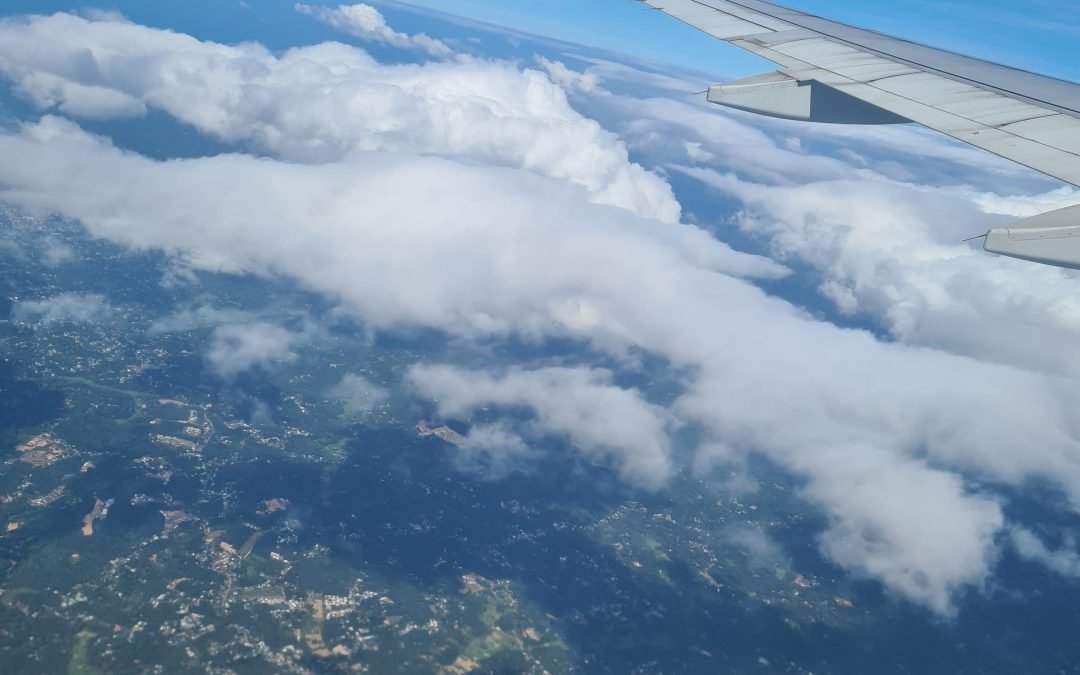
by Sangeetha Vallat | Aug 15, 2025 | Fiction Bites, Short Stories
This short story was first published in the Mean Pepper Vine journal in their July 2023 issue. The idea for this story percolated when I heard a news article about a woman whose husband’s dead body was accompanying her in the cargo of the aeroplane. On the same day, my amma told me about a neighbour and a burial in his village. Both these combined in my head to form this story. I cried as I finished typing this story. A reader, a doctor (who worked on many COVID cases in the UAE), met me and said that this story disturbed her so much, and she grieved for Zubeida.
THE FINAL BOARDING CALL
Four. The number of times Zubeida was airborne between Kochi and Dubai. On her maiden journey, when the aeroplane ascended, she mumbled prayers, eyes scrunched shut, her henna-stained palms entwined with Irfan’s. He whispered, “I am with you, now and forever.”
The next time Zubeida planed was when her Uppa passed. Irfan terminated an official visit and met her at Dubai airport. Their hands interlaced throughout the journey as she soaked his shirt with tears.
Now Zubeida was on a final journey. Never to return to Dubai. And she was alone.
Or not.
Zubeida wanted to fly.
This idea had sprouted when she sat on the lap of an uncle from Dubai and ran her tiny fingers over an embossed velvet picture, lisping “A for A-E-R-O-P-L-A-N-E.”
Every time an aeroplane roared, she bolted out, abandoning everything to gaze up, waving and leaping, her bunny teeth widening a glimmer. Zubeida, the pampered youngest in a family of eight, was the first person to board an aeroplane.
In the quaint coastal town, almost all the menfolk worked in the Middle East, but her father prided himself on his sons, who managed the family business, instead of slaving across the oceans. With an assertive name, ‘All you need’ the family business was profitable. So, Zubeida became the talk of the town when she married a person working in Dubai.
When Zubeida finished school, her family sought a suitable boy. Uppa wanted a groom from the same district. The thought of not seeing his sweetest child for long periods crippled him, but the alliances the marriage broker provided failed to gratify. If Ikkaka liked a boy, Ithaa pointed out a flaw. If Ithaa preferred someone, then Kunj-ikka rebelled. Zubeida wondered if she would ever be married!
One morning surfing the television, Zubeida chanced upon a documentary on Dubai’s splendour and the Burj Al Arab hotel. Nary a passport in hand, Zubeida wistfully let her dreams fly, wishing to see this grandeur someday.
A week later, when her Kunj-ikka informed her that his friend, working in Dubai, would visit them for a ‘bride seeing’, Zubeida’s jaw crashed to the ground. Still, unwilling to leave her family and migrate to the Gulf, she refused to be paraded.
“Grab the chance and escape from this small town. You wanted to fly on an aeroplane?”
“Umma, I wanted to fly to different places for work and not marry and fly away.”
“Women cannot work outside the house. Girls would kill to marry a Dubai groom. Now smile, don’t scowl.”
Zubeida reluctantly dressed, and when serving tea to the groom’s family, she tripped on the carpet, sloshed the tea, and dumped the serving tray on the table. She averted her face and dashed inside with a fluttering heart. Her face flushed, not for her slipshod behaviour but for recognizing the groom.
It was him.
In the tea shop beside the madrasa, Zubeida had observed Irfan’s gaze on her and adored how he flicked his head to settle the wavy hair flopping on his forehead. And at her cousin’s wedding, Irfan had served her extra chatti pathiri, eliciting giggles from her girl gang.
Later, Irfan confessed to Zubeida that his heart had raced since the first time he saw her at a crowded playground, amidst the hoots and whistles renting the air, during the Malabar cup football finals. Zubeida, dressed in a sunflower-yellow skirt and blouse, a white hijab on her head, had clutched her Ikkakka’s hands and walked to the row in front of him. Irfan’s heart lurched to his mouth. Even when his favourite team lost the finals, he sauntered with his head in the clouds, humming a melody. Then, when he saw her recently at a friend’s wedding, he sealed the idea and decided to take up the job in the Gulf. To provide her the best possible life.
Before Zubeida could thank her stars for bringing Irfan to her doorstep, the scuffle pierced her reverie. Uppa retreated to his earlier stand of not sending Zubeida to a land of strangers. Zubeida was in a quandary when Kunj-ikka asked for her opinion. She saw Uppa’s unblinking stare and discerned the stinging sensation in his eyes, but surprised herself by saying, “I want to go to Dubai.”
Umma did a U-turn empathizing with her husband’s pain, and began to convince Kunj-ikka and Zubeida to abide their father. Zubeida knew that she was her Uppa’s world. Once when Uppa had taken her to the shop, she slipped and scraped her knees. It was a surface wound, barely a drop of blood seeped, but Uppa had blamed himself for his recklessness and begged forgiveness from Allah. Likewise, he now blamed himself for allowing Kunj-ikka to bring Irfan home.
Love blinded Zubeida. The latent attraction toward Irfan blossomed exponentially.
Umma hollered curses at her womb that bore Satan and cursed Zubeida to everlasting doom. Then came the statement every mother tells her daughter, “You will understand when you become a mother!”
Uppa never uttered a word to Zubeida. Not then. And never again.
Ikkakka arranged the nikkah. Irfan had come on a month’s leave. Umma complained that there wasn’t enough time for the elaborate rituals. Ikkakka hired vilikarathis or ‘inviters’ to hand over wedding invitations. Umma arranged women from the neighbouring village to make the difficult snacks Paneeneer Petti and Panjara Patta for the groom’s family. Day and night, women engaged in Arikutthu Cheral, pounding tonnes of rice and masala powders. The house was filled with laughter during Vettilla Kettu when hundreds of betel leaf paan were folded, and a lavish dinner was arranged in the front courtyard. Everyone dressed in hues of gold and shimmering red jostled to click pictures with the family.
The traditionally attired women danced the Oppana with Zubeida sitting coyly in the middle. A small confusion arose when a new member of the Oppana gang clapped her hands during the Oppana chaayal. A matriarch raised her voice, exhibited her annoyance, and explained the difference between Oppana chaayal and Oppana murukkam. As things settled down with the dancers, Zubeida’s uncle whined that his Kunjan Urapichathu, the coveted dessert, had a runny egg yolk. Amidst the chaos, finally, Irfan and Zubeida were united in holy matrimony, blessed by well-wishers.
The next day, Zubeida accompanied Irfan to his home. On receiving a phone call, Irfan disappeared with his friends and returned home after two days. Zubeida felt blindfolded and abandoned in a village fair as a stream of visitors arrived to ‘see’ the new bride. Irfan explained later that a friend had met with an accident, and he was at the hospital, donating blood and arranging money for the surgery. Irfan’s mother snickered and stated that her son would even cut off his limb if it would help someone. Zubeida prided herself on Irfan’s goodness but wasn’t ready to sacrifice her life. She vowed to shower infinite love on him, enough for him to forget about altruistic ventures.
Irfan soon returned to Dubai without enjoying the Piyapla Kolu, the 40-day feast, while Zubeida awaited her visa. The impending flight worried her, as none of her family possessed a passport to accompany her to Dubai.
But Irfan surprised everyone by flying home to take his bride across the ocean. She collapsed into his arms. Everyone praised Irfan and pronounced Zubeida lucky. Deaf aunts and toothless uncles to acne-riddled teenagers accompanied them to the airport. Like a political rally, a string of vehicles reached the airport.
But Uppa stayed home.
The spiralling heat in August sapped Zubeida as she stepped out of the air-conditioned confines of the airport. Irfan offered her labaan, which she relished. He explained that butter milk and curd came in bottles and tetra packs, and no one fermented milk to curd. But the skyscrapers on the Sheikh Zayed Road parched her throat as her lips refused to unite. Reaching home, Zubeida frantically searched for the other rooms in their apartment.
“Where is the rest of the house?”
“Insha-Allah, soon we can move into a bigger house. This is a studio. Everything in one room.”
“Aah, OK. I like it. This way, you will always be in my eyesight!”
Days transitioned to months, and whenever Zubeida chatted with Umma on video calls, she saw her Uppa in the periphery. After a while, Zubeida ceased asking Umma to plead on her behalf.
One night, Zubeida woke sobbing. Irfan advised her to visit India for a few days if she missed her family. Zubeida lay her head on his chest and said, “You are my family. And Uppa is still angry with me. I will go when he accepts us.”
“Zubi, we hurt your Uppa. Don’t behave like this. Placate him, tell him that his little girl will be a mother soon.”
“Hmmm. Later.”
To cheer her, Irfan drove her to the Burj Al Arab. They lunched at the submarine restaurant, the glass walls overlooking the splendid sea life. The sumptuous 7-course meal was a symphony of flavors. For Zubeida, the highlight of the lunch fare was the extra dessert served by the table steward, a treat to the lovely couple from his hometown. Irfan had to peel her away from her never-ending conversations about the trees and fish in the pond of her village.
Irfan informed Zubeida that he had borrowed money from his friends to take her there. She puffed her face and advised him to save money. She rued that, assailed by pregnancy nausea, she had puked every bit of the sensational lunch.
“The joy in your eyes was worth the overtime needed to return the loan. Insha-Allah, we will go again.”
Irfan satiated every wish of hers.
When Ikkakka relayed the news of Uppa’s demise, Zubeida was wracked with guilt. Irfan cut his official trip to Oman and met her at the Dubai airport. All through the journey, he consoled his grieving wife.
Now, Zubeida was in her final trimester; by now, she should have reached India, her parents’ home for birthing her firstborn. In the entire world, all plans suffered abortion. Everybody grieved—no celebrations or gatherings happened. The pandemic shadowed all existence. Flights remained cancelled. Fortunately, Zubeida could book her ticket on the Vande Bharat bubble services to Kerala. A last resort as the wretched Coronavirus rendered everyone’s world topsy-turvy.
Zubeida slammed the suitcase tight and clicked the locks. She rechecked her mobile. Irfan was late. He had promised to take her to the Thumbay hospital to get the permission-to-fly certificate. Zubeida stretched her sore back, gently circling her palms on her plump belly and cooing to her baby.
“Uppa will be here soon, don’t worry. Let’s drink milk.”
Zubeida waddled to the corner of their studio, decanted the remaining milk, and warmed it. Irfan abhorred milk. Zubeida understood the necessity of every penny saved; she couldn’t waste the milk. A chuckle escaped her lips at a memory when Irfan had mentioned he desired four children, and she had swatted at his hands, giggling.
“I cannot run after four brats, begging them to drink milk. Why so many children?”
“My children and milk? No way!” He winked and added, “So our house will always echo with laughter and squeals. You will never miss me when I go to work.”
“That’s impossible. No number of kids can replace your presence.” She kissed the tip of his nose.
Irfan had tickled her as she squealed and laughed.
Zubeida gulped the milk and rested. The couch in the living room sagged and creaked each time she sat. Irfan sniggered at it, and she would mock pout, only to laugh at each other’s silly faces. Then he would cup her face and whisper, “You make my ordinary life, extraordinary.” As she drew patterns on his lush beard with her fingers, blinking back tears of mirth. This was their thing.
After an hour of languid household drudgery, Zubeida checked the time. She re-dialled Irfan’s number. An Arabic voice drawled. Zubeida hurled the mobile on the bed. It somersaulted and landed on the other side. With a sharp intake of breath, Zubeida clutched her belly and cautiously bent to pick it up. Then, ascertaining that the fall hadn’t damaged the display, she phoned her friend, whose phone went unanswered.
“Allah! What’s happening? Where’s everybody?!”
Zubeida booked a Careem cab. Then, armed with a mask and gloves, she locked the house. Struggling with the gloves, she futilely tried Irfan’s number.
She reached the hospital on time and received the necessary certificate and the negative PCR report and taxied home, expecting to find Irfan waiting, but in vain.
Zubeida picked the invisible crumbs off the table, refilled the bottles of pulses and condiments. She fiddled with the TV remote. Next, redialling his number, she felt her innards constrict. When the hour crossed 9.00 pm, she contacted his friend.
“Hello. Zubeida here. Irfan-Ka hasn’t come home yet. He left yesterday and continued the night shift, but now I can’t reach him on the phone.”
“Hello, Zubeida. All well? Irfan is busy. His phone battery has drained. I will send someone to stay with you tonight.”
“That’s alright. I can stay alone. Can you call Irfan so I can talk to him?”
“Erm, he is operating a machine and cannot speak to you now.”
Irfan’s sudden indifference stung her. Zubeida had followed up on her vow, and Irfan never stayed back late at work or went out to meet friends without taking her along. He was ecstatic at her pregnancy and assured to be with her before she could think of needing him. She switched off the muted TV, muttering under her breath as all the serials followed the trope of extramarital affairs.
Zubeida warmed up lunch leftovers and forced herself to eat. She touched her belly; the baby was lethargic today. A feeling of unease sheathed her as she prayed for the baby’s good health. She realized it was late in India to speak with Umma, so instead, she took the prayer beads and rolled them with her fingers, reciting the tasbih.
Last few weeks, Irfan had been busy coordinating with the Indian Embassy and the Pravasi Malayalee association, arranging the repatriation of the Indians stuck in the UAE due to COVID. Moreover, Irfan assisted in obtaining the clearance certificates, adhering to the government protocols. The remains of the COVID-positive patients had to be sealed according to the WHO guidelines. Assimilation of these procedures exhausted him, and the other day, he confided in her about the helplessness of people.
“It hurts when, after all the difficulties, we send the bodies to India, and they’re returned, citing silly reasons like insufficient clearances to admit them into the country.”
“Ikka, you are working nonstop. Soon I will leave. Please spend time with me.”
“Zubi, these people need me. Now is the time to worry about humanity. Don’t be selfish. Once the baby is born, I will come and spend all my time with you.”
It had been days since Irfan and Zubeida shared a meal or had silly fights. She missed him already. As exhaustion tugged Zubeida, she slipped into a fitful sleep.
Zubeida squinted through the windows in the morning. A gloomy curtain of mist lay suspended. She pulled the duvet tighter and willed the tears from tumbling. Because once they started, it would be a tsunami. No sign of Irfan, yet. In a few hours, she had to reach the airport.
“Irfan has a fever and is sleeping.” The friend answered.
“I am flying today! Wake him and ask him to come home now!”
“You be ready, I will drop you at the airport.”
Zubeida wondered if Irfan was miffed. Or planning a surprise and flying along with her to India.
This was the first time she would be travelling alone. Irfan wanted to save his annual leave so he could travel to see the baby. Zubeida secretly hoped that he would join her at the airport. She even checked the wardrobe to see if his clothes were missing and deflated like a balloon, finding all his clothes lined up neatly.
A few friends dropped in to bid farewell. The women sniffled and hugged her; sombreness permeated. Irfan’s friend drove her to the airport.
“Why is Irfan doing this? Does he have a fever, or is it something else?”
The friend stiffened like a starched shirt. “With Corona spreading, he doesn’t want to risk infecting you, especially now.”
Zubeida waited until the final boarding call for her flight, hoping for Irfan to appear.
As the aeroplane surged, she glanced at the sailboat building and sighed. Finishing the formalities at the Nedumbassery airport and collecting her luggage, Zubeida stepped out to see Ikkakka and Irfan’s Uppa waiting. Her brother took her directly to the hospital, overriding Zubeida’s protests. She wondered why Irfan’s Uppa avoided her eyes as if he wasn’t happy to see her.
The next day, when the doctors confirmed all her parameters were stable, Ikkakka gathered her in his arms and relayed the tragic news.
The noises around faded from her ears. Her breath sputtered as she tried to grasp the imperceptible hands that betrayed her.
Irfan had suffered a fatal cardiac arrest after being infected with COVID-19. Fearing her delicate condition, friends in the UAE and family in India had decided to ascertain her medical fitness before revealing it.
His embalmed body had travelled in the cargo with her. The respective officials had sped up the formalities in dispatching Irfan’s body.
She hadn’t travelled alone after all.
Zubeida quivered, and her keening rattled the insides of people around. Placing one foot in front of another was too challenging for her. As she slumped onto the floor, her hijab snagged a nail on the wall, and her dark curls tumbled out.
Nothing else held relevance other than her irretrievable loss. She berated herself that when Irfan was dying, she had been thinking about the wastage of milk! At how silly her worries were when life slid from her. A volley of questions loomed in her mind.
If only…
She couldn’t remember the last words he had spoken to her. When did they last hug?
She had eventually failed to keep her vow.
Zubeida’s Umma folded her hands, pleading. “Allah, the words I uttered in anger have come true! I wish I had my tongue pulled out.”
The Imam stood at Irfan’s head facing the qiblah, and the men stood in odd-numbered rows reciting the salat janazah. The prayers were recited standing and silently only portions voiced aloud. The embalmed body couldn’t be washed, so the men placed the three pieces of shroud cloth on the body.
Suddenly, there was a commotion in the crowd. A man carrying a white bundle rushed in and whispered to the Imam.
“My baby was stillborn, and I don’t have money for a separate grave. Can you please bury my child along with him? Please?”
The Imam congregated with the men of Irfan’s family.
“Allahu Akbar. Irfan is useful to someone even after death.”
The Imam accepted the tiny body, gently placed it on Irfan’s chest and closed the casket. The unfortunate fathers threw three handfuls of mud on their sons’ collective casket. Everyone chorused, ‘We created you from it, and return you into it, and from it we raise you a second time.’ Zubeida’s and Irfan’s brothers lowered the casket into the grave, dug parallel to Mecca.
“Eat this talbina, it soothes and takes away some of the grief.” Umma spooned a morsel to calm Zubeida’s roiling heart. Kunj-ikka sat beside her, informing her about the dual burial.
“Allah called Irfan to paradise early, and he was unable to see his child, but blessed to carry and protect another baby in his last journey. Allahu Akbar,” Zubeida cradled and rocked herself as tears drenched her baby bump.
Zubeida’s official mourning period was four months and ten days. She would birth during this period. Raise her child in mourning. Because the symptoms of her bereavement would never abate.
And Zubeida never wanted to fly again.
by Sangeetha Vallat | Aug 4, 2025 | Musings, Today's Katha
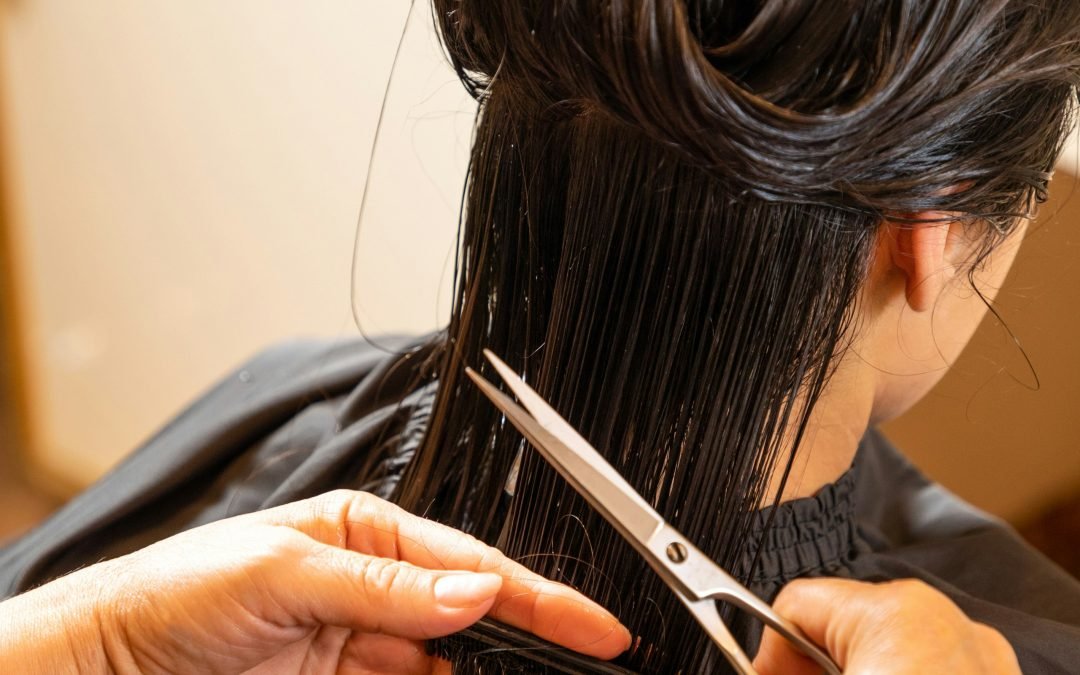
I wrote this blog post in August 2018 under the title Bad Hair Day(s). My haircut saga continues, and in 2021, I published a version of this in The Short Humour Site (UK), retitled as My Imperfect Look. Quite recently, I had another visit to the salon, and my hairdresser announced that she had previously worked at the Royal Household, snipping royal hair. Oh, how the mighty have fallen!
How I Went from Rapunzel to Mowgli
“What happened to your hair?”
“Well… I had a haircut!”
“But why?”
“Oh… I was bored. So, I just chopped it off.”
“But who in their right mind cuts such long, healthy hair?”
Me. I do. And I did.
Honestly, I was just tired of people staring at my long locks, especially when a few grey strands made a grand appearance mid-conversation. I wasn’t going for any particular “look,” just less judgment and more comfort.
When I told the salon lady I wanted to go really short, she looked horrified – as if I’d asked her to commit a crime. I actually had to convince her to snip it off. Can you believe that?
See, I’ve never liked visiting salons. Those perfectly made-up women, gliding around recommending one beauty product after another, sizing you up with their sharp assessments of your skin type, hair texture, and eyebrow shape… I just went in for eyebrow ‘threading’ and recently for haircuts. If I let them, they’d probably critique my toes too!
I know I’m no goddess of flawlessness. But somehow, I’ve survived just fine with all my imperfections, and have had my fair share of admirers, thank you very much. So please, keep your opinions and just remove that extra hair that makes my eyebrows look like sunrays that belong on a political party logo.
Once, I dared to try a facial before my wedding, and another time, when a friend dragged me in for a free “Aqua Skin Treatment” trial. After an hour of mysterious massaging and spraying my face with water, I looked like a strawberry. I was told to avoid the sun. In Chennai? Seriously? I wrapped my face in a shawl like an undercover agent, reached home. The next morning, my face was a peeling, red disaster. Meanwhile, my friend was still in the “pink” phase. I ended up taking sick leave and hiding away from humanity. From Jekyll, I had transformed into Hyde.
And don’t get me started on nail spas, eyelash extensions, or makeup products. I once sat with a bunch of fashion-forward women raving about nail polish shades, eyeshadows, and the 14 lipsticks they rotate between. Overwhelmed, I finally bought my first-ever brand-new lipstick. Until then, I’d only used hand-me-downs from cousins and aunts.
Even my school friends, just as novice as I, gasped at the price of BB creams and compacts. We’d buy them anyway, only to let them rot in a corner. Once a year, I declutter my beauty shelf, discovering expired bottles, half-used creams, and mystery products whose purpose I can’t even recall. Some smell like sour milk, some are stuck tighter than dried clay. I’m too scared to ask what “body yoghurt” is even supposed to do.
Anyway, back to the haircut.
I stepped into the salon after what felt like a decade, pictures of celebrities with stylish short haircuts on my mobile. The hairstylist, still sceptical, finally began. Snip after snip, layer after layer, years of oiling, shampooing, and combing fell to the floor. I closed my eyes, enjoying the sound of liberation. When I finally looked in the mirror, I saw a neat, short-haired version of myself. I liked it. I even had her run the clipper at the back of my neck. Perfect for Chennai’s brutal summer.
The first few days were bliss. Easy wash, no combing needed. My hair grew back quickly. Too quickly, in fact. Soon, I looked like Medusa (minus the snakes). No pin, band, or product could tame it. I resembled Mowgli from The Jungle Book. Why is it that haircuts only look good the day we get them? It’s like Cinderella’s magic. It vanishes at midnight.
Now I’m at a crossroads. Should I grow it out again, at least enough to tie a knot? Should I color it like everyone else? (Too lazy for regular touch-ups.) Should I chop it again? (Haircut every 20 days? Too expensive. We had moved to the UAE.) Maybe I’ll just embrace the wild look. Unkempt chic, anyone?
Oh dear, my imperfections are multiplying!
Some say this is karmic payback for chopping off my glorious hair. Maybe. But at least I did it my way.
Cut to a year later
So, I was sitting in the salon in Dubai waiting for the Russian model to work on my tresses. This time, I wasn’t too adventurous and opted for a layer cut that retained the lengthy mane. As I was reading Russian literature and engrossed in Tolstoy and Dostoevsky, I sprang into conversation while Nadia snipped my hair. I learnt a lot about her life in Russia, her son, whom she had to leave with her mother, and how she yearned to meet her family. At the end of our session, there was hardly any change in my appearance.
At home, my mother and my husband exchanged funny looks as I explained my imperceptible haircut.
Months passed; my luxuriant growth had begun to imitate Medusa. Again. The final straw was when I took my mother to a hospital where a nurse asked me if we were sisters! My mother had fewer grey strands than I did. Salt (more) and (less) pepper suits better with short hair.
I selected another hairstylist – A clean-shaven hulk named Ralph. His bald head shining, he chopped my long hair and gave me what I asked. A complete makeover.
Well, now I look like a ten-year-old strapped in a 45-year-old body.
PS. My haircut woes continue. Some days I have Princess D’s hairstyle. On other days, I am Indira Gandhi, sometimes Indra Nooyi…. most days I look like – a messy alien.
Photo by – Unsplash Farhad Ibrahimzade

by Sangeetha Vallat | Jul 20, 2025 | Musings, Today's Katha
This was a blog post I wrote in August 2019. Teacher’s Day was around the corner, and I was feeling nostalgic about the calling I had misread. Dedicated to all the outstanding educators.
TO TEACH OR NOT TO TEACH.
I, too, had a dream, an ambition during my growing-up years. To be a Teacher ….an English teacher. We all love our English teacher more than the other subject teachers, don’t we?! Although some of us might be strong in numbers or the world of experiments or analyzing our past, most of us would be decent enough in the languages (or so we thought, having hardly studied for it during the exams), especially the Language given to us by the British.
My favourite game in my growing-up years was the “teacher game”. In a make-believe sari and a stick in hand, I zealously recited rhymes and stories to my collection of dolls and my dad. Yes, Achan sat in line with my dolls with a pencil and a notebook. I had colourful chalk pieces to write on the wooden doors of my Air Force quarters. I dusted off the chalk marks after playtime, and I never sullied the walls. My Achan was the best student in my class. He put up with all of my idiosyncrasies throughout, always. I would beat him, give him spelling tests, and assign homework.
An English teacher is someone who is well-dressed and speaks politely, and never punishes (mainly); all in all, they are loved by every student. This has been my understanding since my school days. I recently read about an English Teacher in a Government school near Chennai who was so loved by his students that they, along with their parents, refused to let him go on transfer; social media was abuzz with it. As I aspired to be an impactful teacher, I decided to pursue my degree in English literature (the railway job was in my future, but still, one could dream), another impetus being the introduction to good literature. I enjoyed reading the books in the prescribed syllabus…Shakespeare, Dante, Bernard Shaw, Milton, Hemingway, and their ilk. Poetry was not my strong point; I fell in love with the Drama paper. Shakespeare’s “Comedy of Errors”, Arthur Miller’s “The Death of a Salesman”, Oscar Wilde’s “The Importance of Being Earnest”, Tennessee Williams’ “The Glass Menagerie”, so many movies have been inspired by these, and when I recognise the sequence in a film that mirrors these books I whistle joyfully!
Never had the good fortune of studying under an inspiring special teacher, but the ambition stayed on. I remember being mesmerised by my English Professor during my degree correspondence classes. (Pity that I couldn’t join a regular college as I was waiting for my railway posting orders). What diction and a baritone voice. He made even the dry subjects enjoyable. I was proud because he always picked me out from the crowd to read passages aloud to the class. I remember having difficulty pronouncing “ecclesiastical,” and he smiled (I melted!) and gently corrected me. I can understand why students fall in love with their professors, especially the English teachers who sweep you off your feet, mouthing Shakespeare and Wilde!! Hah…I digress.
With great fortitude, I took on the task of tutoring the neighborhood kids alongside a Kendriya Vidyalaya mathematics teacher (he was the Teacher, and I was his assistant). This teacher wanted an assistant to handle English and Social Sciences. I liked these subjects and accepted his offer. I put my heart and soul into imparting knowledge to young minds. After a month, my employer asked me to teach Sanskrit to the students.
I was aghast and told him, “But I never studied Sanskrit in school.”
“You know Hindi? Sanskrit is similar. Add a couple of dots to the script. You can do it, browse through their books, it’s easy, I have been taking classes like that only.”
I reluctantly took on the extra role, poring through textbooks trying to learn Sanskrit and then teach the students. Our education system was atrocious; teachers managed any subject and any grade.
I was punctual in the tuition, prepared notes, and was gentle with the students. They never took me seriously and played pranks on me, and the primary teacher also started taking tuition elsewhere, leaving these students under my capable tutelage. He would come much later, give them sums, summarise experiments, and rush to another home tuition centre. I was distressed to see the mark sheets at the end of my third month of teaching. Almost all of my students failed to secure ‘pass’ marks. I had even managed to get a LKG kid to fail in her examinations. Was that even possible? Can they detain a young child? This was a motherless girl, Kayalvizhi, thin and dark but highly spirited. She sat on my lap during the tuition class.
Her dad oiled her hair, tied it into pigtails, powdered her face, and drew a black star on her forehead. Soon, he was to bring her a new mom, and I prayed that she wouldn’t come between the father-daughter love.
There was another adolescent Pandi, whose father worked in my Achan’s department. Pandi was the naughtiest and the lousiest in studies. But he was my favourite. He failed in all subjects. Before I joined, he had passed in at least a few subjects. Invariably, everyone failed in Sanskrit.
I told my employer that what he was doing was wrong. Either he should be present in this centre for the whole duration of classes, or hire a better assistant who knows how to handle the students. I resigned, and he left the students unattended. I watched the children playing in the park during classes.
Not ready to accept my failure (yet), I joined as a teacher in a nearby school. My Amma said that perhaps I would do better in a classroom or school situation. She reasoned that these tuition kids were beyond repair and not my fault (A mother’s logic). Actually, in those days, it was true that only children who needed extra assistance attended tuition, unlike nowadays, when even the brightest attend tuition. It’s become a matter of pride. My neighbour, who worked at a nearby school, took pity on me, as I was bored waiting for my posting letter from the Railways. I was instructed to come prepared with a “Rhyme” for kindergarten, as the principal wanted to test my teaching skills. Racking my brains, I selected a simple rhyme that would be easy to enact. Armed with dancing moves (Tu cheez badi hai mast was the top of the chart in those days!) and jumping tricks, I addressed my class of tiny tots, who were measuring me with eyes wide with bewilderment. I felt trapped like a zoo animal. They waited to see rabbits fly out of my bag.
As the cue for action came from the principal, I was on, guns blazing. Hickory Dickory Dock (I was doing the Akshay Kumar hand movements), and then mayhem ensued. I was perplexed at the cries and shrieks of “miss he is pushing me “, “miss she’s biting her”, “miss I want my mommy”.
Complete pandemonium, and I was sweating and swearing. With kids pulling my dress and climbing onto me, I looked at the principal with a silent cry for help, who concluded that tiny tots were a burden on me (I still am incapable of handling kids). Not wanting to discourage me, she decided to give me a chance with the older kids.
I was the class teacher for grade 2 students, who were better behaved. They showered me with so much love. I revelled in their adulation. I was famous and impactful within a day. The principal called me over and mildly chastised me for using “yeah” instead of “yes,” as the whole school was chanting “yeah” fervently (this was in 1995, when casual slang wasn’t acceptable in a formal setting). I grinned and answered “yeah” and left the room.
The third day dawned fresh, and I reached the school in a yellow organza sari. Young girls often admire and compliment their teachers on their clothes. I had started wearing saris to school because the principal said otherwise, I looked like a school kid myself. These saris were borrowed from my Amma and a cousin. School was a breeze till noon. My energy waned by the time the sun was overhead, with continuous classes and homework corrections, with not a free period. I was tasked with an additional responsibility to handle the grade 6 brats as their teacher had an emergency. The kids were so tall, I felt like a Lilliputian! My zeal and enthusiasm ebbed, exhaustion kicked in, and I was unable to cope with the Herculean task of standing on my feet, hollering at the kids. I, a frail woman (many eons ago), fainted in class, mid-sentence, and was sent home in a cycle rickshaw. What a bathetic conclusion!
I sent my resignation through the neighbour and was pleasantly surprised when the principal requested that I come as a part-time teacher at least, such was my impact! Realisation struck that I was not cut out for TEACHING and it was not my calling. And not wanting to risk the future generations, I called it Quits!! I should have realised this when I narrowly missed being born on Teacher’s Day!
Salute to the teachers who continue to inspire and mould young minds!!!
P.S. The unrequited dream still affects me, and I don the teacher’s robe at times with my spouse. He calls me “question paper”!!
Photo – Unsplash Haseeb Modi
by Sangeetha Vallat | Jul 15, 2025 | Fiction Bites, Short Stories
My Achan and I liked black tea. He often asked me to make ‘Kattan Chaya’. When a chance discussion with neighbours about customs and traditions sparked an idea, I combined our love for Suliamani Chaya and brewed this short fiction. This was written in July 2022 for the Tell Me Your Story (TMYS) project, titled ‘Food and Drinks- Cultural Identity and Ideology II.’
SULAIMANI CHAI
I trudged down the stairs with palms spreadeagled under my football belly. The chanting of AUM from the stereo pervaded the room. On the swaying wooden swing sat my Appa rolling the beads of the tasbih (Islamic prayer beads).
‘Do you still listen to this every day, Appa?’ I eased into the high-backed chair and rested my swollen feet on the footstool.
‘Old habits die hard, kannamma. Along with your Umma’s coffee, this too percolated into my system. I will get you coffee.’ Appa ambled to the kitchen, not before thrusting a cushion for my back.
My Umma smiled, perched on the wall behind the haze of incense. We took this picture on vacation in Ooty. Umma made matching outfits for us. She looked adorable in any attire. I was a pale shadow of her. A recurring joke amongst my friends was that the hospital must have swapped me as an infant.
Umma hailed from an affluent Iyengar family of lawyers and was widely criticized for eloping with the son of an Imam. Fortunately, the families were non-believers in honour killing, and Appa and Umma became the poster couple for religious harmony. Well, I addressed Umma in the Malayalee-Muslim way and Appa in the Tamil-Brahmin manner.
‘Nothing like a fresh decoction coffee.’ Appa’s eyes crinkled as he cautiously handed over the steaming cup.
‘Ah, the aroma! Where’s yours?’
‘Ramzan roza (fasting), Kannamma.’
‘Tch, I forgot. Suraj has sent a box of dates for you.’
‘Alhamdulillah.’
‘Nowadays, I am turning into a tea person. Suraj prefers tea. He loves sulaimani (spiced black tea).’The colourful bangles on my hands from the valakaapu (baby shower) ceremony tinkled like the wind chime back home. Hah, wasn’t this also my home? I missed Suraj. Already. While there, I missed my Appa. If only one could have everyone around.
‘Hmmm. My choice changed into Umma’s beverage, so the cycle continues.’
The caffeine smell conjured a memory, and a smile tugged at my lips. When I was in grade six, Umma was unwell, and I wished to surprise my Appa by making coffee, unaware that he always had tea first in the morning. So, mixing a smidgen of filter-coffee powder into a cup of lukewarm milk, I offered it to Appa. He beamed at me, unmindful of the flotsam, gulped it, and declared it the best coffee ever.
‘You are glowing in the valakaapu pictures. Masha-Allah! The black sari you draped while coming home contrasts perfectly, too! The traditional gifting of a black sari to a pregnant daughter in her fifth month to ward off the evil eyes makes absolute sense.’
‘But Umma never wore black. She said it reflected and darkened her face. If only evil eyes could have been….’
‘Kannamma, only happy thoughts now. OK, idlis for breakfast. For lunch, I will try your granny’s special Iyengar puliyodharai (tangy tamarind rice).’
‘Wow. That would be a miracle, Appa, for someone who loves biryani to make puliyodharai. But when you are fasting….’
‘Hah, I can’t starve you NOW. Remember, once you wanted to observe Ramzan fasting and fainted. You and your Umma cannot handle hunger.’
I gazed at his creased forehead with the darkened centre as he pored over a tattered booklet, handwritten recipes of my nine-yard sari-clad granny.
I left Appa to stew and called Suraj’s mobile, but couldn’t connect. According to his uber-traditional dad’s dictum, Suraj was sent out on an errand when I departed for my Appa’s house. It’s considered bad luck if the husband sees his pregnant wife leaving for her delivery. I shook my head as images of the seemantham (baby shower) function came alive. They tied the choicest of sweets and savouries onto my belly with my sari end and dispatched me to our bedroom like a new bride. His aunt ordered us to polish off the snacks before morning. I made Suraj eat as much as he could, and in the morning, he complained of indigestion, poor darling. Yes, silly customs, but Suraj loves his family and their traditions, so I gave in. A way to showcase my gratitude to his family for accepting me, a product of mixed religions.
While relishing idlis and onion chutney, I asked Appa if I would have valakkappu and seemantham for all my successive deliveries.
‘Are you planning for a cricket team?’ Appa winked and continued, ‘Valakkappu can be done if one wishes, but seemantham, as the name suggests, is done only during the first pregnancy.’
‘Hmm… Suraj’s family follows so many customs! His Amma asked me if I had celebrated my puberty function, and how I blushed! Reading my face accurately, she explained it. Traditionally, the mother is not supposed to see the daughter for the first time when she gets her first period, and on the third day, a special sweet puttu (steamed rice cake) is given to the girl. On the fourth day, five women, other than the mother, pour turmeric water along with neem leaves through a sieve over the girl’s head. If I have a daughter, she will go through this rigmarole!’
‘Your Umma didn’t want to advertise your menarche. I love customs and rituals. However, unfortunately, nowadays, reeking of modernism, people often abhor such traditions. So slowly, these customs will disappear unless elders insist and impart.’
‘Oh, but that neighbour auntie forced me to gulp cups of gingelly oil and some gunk made of urad dhal. Argh! How I hated her.’
‘Kamala maami was a kind soul. Those food items are believed to strengthen a woman’s childbearing muscles. It’s like strike when the iron is hot, right when a girl is….’
‘Appppaaa, your love for idioms, proverbs, whatever is annoying. Grr!’
‘You are your mother’s daughter. She used to shut her ears!’
‘Suraj calls me Daddy’s girl. He says, although I look nothing like you, I have some of your mannerisms.’
A click escaped my lips as I noticed a fleeting grimace on Appa’s face before he said, ‘Kannamma, you watch TV. It’s time for Dhuhr namaz.’
Appa rarely called me by my name. It was always Kannamma. He loved Bharathiar’s poetry. Appa read both in Tamil and Malayalam. Sadly, I never picked up Malayalam from Appa, as my parents conversed in the common language, Tamil.
Once in anger, when a neighbour mocked my parents’ religious disparity, I shoved a Ganesha statue from the table. Appa replaced the broken statue before Umma noticed. He sat me down and explained how, as parents, they didn’t want to force their religious beliefs on me. To let me choose my path. Non-vegetarian food didn’t gel with me, so I grew up vegetarian. I enjoyed wearing ethnic clothes and visiting the temple with Umma. Although I watched Appa performing namaz every day, I never asked him to teach me. And in college, Suraj, a typical brahmin lad, proposed, and I accepted.
A bowl of pomegranate materialized next to me.
‘Appa, sit here with me.’
‘OK, but later, I will ace your granny’s puliyodharai. I know you crave it.’
‘We can cook together. You, the MasterChef, and I, the sous-chef. Deal!’
With the TV on, I dozed, and Appa was on the phone with my mother-in-law when I woke. She treated me like her own, perhaps pitying a motherless girl. I watched my stocky, stooping Appa talking obsequiously.
Umma’s accident had completely transformed Appa. He discarded exercise and eating right. Age was catching up as well.
As parents, Umma was a disciplinarian, while Appa sanctioned all my whims. Appa stopped smoking after the accident as if he had to live Umma’s deprived quota too. Although he never scolded me, he gently assured that I reigned in my rebelliousness.
‘Let’s start cooking. Before the little one begins kicking and demanding food.’ Appa tenderly tousled my hair.
‘What did Amma say?’
‘She will send me a list of what to feed you after delivery. It seems a new mother should avoid red and green chillies. Instead, food is to be prepared using pepper and cumin seeds. And to feed you loads of snake-gourd and broad beans.’
‘Hmmm. Have you found someone to bathe the baby?’
‘Yes, Kannamma.’
‘I will make sulaimani chai while you reread the recipe.’
‘Subhan Allah!’
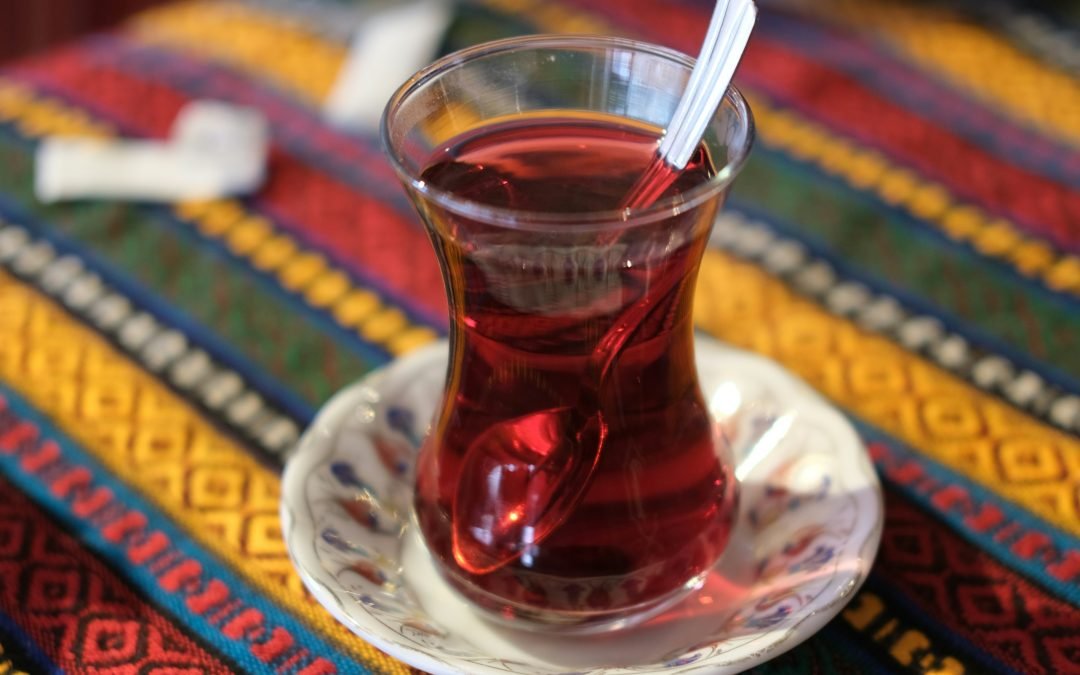
This has been our family thing. Always. A light black tea, a stick of cinnamon, and a spoonful of sugar served with a sprig of mint leaves in a glass mug, just like Appa’s Umma had practised. I loved to watch my parents unwind every night with a sulaimani, discussing their work, my future, and me. Suraj and I implemented this now—our special time.
“You drink milk with saffron, not black tea!”
“APPA…”
A whirlpool of Deja vu slapped me while Appa and I worked like the two needles of a clock. I mutely added coriander, sesame, and methi seeds while Appa dry-roasted them.
We had been cooking aviyal (mixed vegetable stew). Appa chopped the veggies while I ground the coconut and green chillies, and then churned the sour curd with a fork when we received the news of Umma’s road accident. Appa left me with Kamala Aunty and returned after two days, haggard and dazed, with the lines on his face never dissolving.
The image of Umma waving from her bike on her way to work was tattooed forever in my mind. It was her birthday. And last day.
Appa and Umma were labeled the lovebirds of our colony.
Our neighbours regaled stories of how Umma folded Appa’s banana leaf inwards at a Hindu wedding after lunch to indicate satisfaction and a wish to return for happier events, unlike when it was folded outwards at unfortunate events. And once, at a Muslim ceremony, Umma was aghast at seeing people sitting around a large plate and sharing food. Appa explained the significance of communal camaraderie and served her a bowl of curd rice.
They were each other’s constant, Guiding and Complementing. Time never healed Appa. But these days, he was excited and certain of having a granddaughter.
‘Hello, where are you lost in thoughts? This is your granny’s powder with the secret ingredient that takes the puliyodharai to the next level.’
I sprinkled the powder and gently mixed the rice.
‘You are handling it like it’s a rare specimen. I wish you had pursued science. Suddenly, you hated science. Weird.’
Securing the utensil with a lid, I let it rest, and followed Appa to the living room as he switched on the TV for the noon news. How could I tell him that the results descried during a science project in Genetics during college impelled me to hate science?
A confrontation would create insecurities.
After losing Umma, in its aftershock, paranoia gripped me. Fear of losing my other parent. Many nights I watched if Appa’s chest rose and fell. If he stayed late at work, I was scarred with images of Appa lying in a pool of blood on the road.
Suraj saved me from sliding into neurosis and wrecking my life. Destiny paired us at a cookery competition. In replicating a street food, however clichéd it might sound, sparks flew, the universe collided, and we won the event and each other with our dhabeli (a Gujarati snack). The butter-slathered buns filled with peanuts and sev (fried gram flour) sealed our hearts together. His patient love and positive vibes helped me overcome my anxieties.
This pregnancy had me thinking about the choices my parents made. But why didn’t they expose me to the truth? Giving life to an abandoned child was a noble deed. My questions will remain unasked and unanswered.
I watched Appa’s wrinkled face as he rested his head on his hand, the thumb under his chin, and the gnarled index finger across his cheek to his temple. My love spurted through my eyes. Ah, wretched hormones! Then, padding across, I linked my hands around his neck and kissed his bald pate.
My Appa.
Like the golden colour seeping from the tea leaves into the sulaimani, Appa is one ingredient integral to my life.
&*&
Photo By – Unsplash Zeki Okur