by Sangeetha Vallat | Jul 15, 2025 | Fiction Bites, Short Stories
Sarojamma was a maid in Bangalore, and this is her story. Ever since I began writing, a few stories of strong women have slipped into my fiction as characters. The mother-in-law in this story is based on my own. I added a few fictional ingredients and cooked up this short fiction. This was an entry written in September 2022 for Tell Me Your Story – TMYS, Story Project 10, a niche publisher focusing on Women’s History among various other topics, and was published in an anthology titled DEVI.
A MOTHER LIKE NO OTHER.
Sarojamma was the hot topic of discussion in our apartment complex, ‘Swagat’, since the news of the marriage broke out. During the morning walks on the rubberized tracks that snaked around the massive 15 towers, spread in the shape of the alphabet S, whispers about Sarojamma rent the air.
Red-haired aunties in salwar-kameez and Adidas sneakers swung their dumpy arms in tandem, discussing the latest gossip – the wedding. Porky uncles in shorts and T-shirts with UCLA and NYU flashing in bold letters huddled in the corner of the tennis court, gesticulating and muttering about where the world was headed. Nubile girls in posh tights displaying Victoria’s Secrets and theirs, jiggled and trotted ahead of the aunties, sipping kale juice as music blared from their ears. The ball missed the basket and bounded higher as the acne-ridden boys collectively exhaled, their eyes not on the ball bouncing on the ground.
The wives served hot puris and dished out information on the upcoming nuptials for which they were collecting gift money. The bewildered husbands bobbed their wool-gathering heads.
If you were wondering who the…, well, let us not resort to crass language as we are all educated society people. So, who was this Sarojamma, and why was she on the radar in ‘Swagat’, the multi-storeyed residential towers in JK Nagar in the Garden City of Bengaluru?
Sarojamma was our 62-year-old maid, working in many houses in ‘Swagat’, and most of the residents called her ‘amma’ or ‘ajji’. I stayed in the B tower on the 9th floor, and Sarojamma managed to keep our utensils and floor spotless.
To set the context right, I need to narrate the story from the time before I heard about the wedding.
Sarojamma huffed and puffed as she reached the gated community. She wiped her face, taking care not to smudge the red circle of vermilion right in the middle of the lined forehead. Then, she proffered the identity card to the watchman, who blinked his eyes rapidly and said, “I can’t believe that you are arriving late to work!”
The reticent Sarojamma flashed her perfunctory smile, revealing her betel-stained teeth. She waited while the watchman performed the customary entry of her details in the register. Finally, she trudged up the walkway, entered the elevator, and reached her workplace.
The livid lady of the house answered the doorbell. “This is the third time you have been late in the past six months! At least buy a mobile phone, so I can call you to find out your whereabouts.” Raji peered through her glasses, lashing at Sarojamma, who swiftly moved to the kitchen and worked at the sink that brimmed with dirty dishes.
Raji, a freelance writer working on an article, went back to typing on her laptop. She inhabited the large apartment with her twins, husband, and his mother. The master of the house mostly trotted around the globe while Raji juggled with the kids, work, home, and managing the cantankerous mother-in-law.
That would be me, the cantankerous one. This term was first used to describe me by a section superintendent years ago when I was a lower-level clerk in a state government office in Madras (now renamed Chennai.) Old names and old people were chucked away into the annals of history. I had regaled the office incident to my dearest daughter-in-law once upon a time, and it has been her favourite word since. However, pardon my digression; it happens frequently nowadays. I got lost in my chain of thoughts. Where was I?
Sarojamma washed the vessels and neatly organized them on a towel to dry. Then she took the broom and meticulously swept room by room, collecting the fine dust and hair into a dustpan. She entered Raji’s room with a gentle knock on the door. Raji gestured with a finger on her lips, listening intently on her mobile. With International Women’s Day approaching, she was wrecking her fingernails, googling inspirational women to write an article. My suggestion of ‘me’ being the suitable example attracted smirks. Sarojamma quietly tiptoed and swept the room clean as Raji stared at the blank screen.
Even though engrossed in the daily soap on Sun TV, my eyes and ears were all over. The story never progressed, and I could catch forty or fifty winks midway and still wake up to the same sobbing scene. I diligently followed the doctor’s advice and planted myself on the balcony, sharing space with the numerous potted plants in the mornings, soaking in the sun. Thanks to my well-oiled (coconut oil, a miracle worker!) genes, my eyes and ears were attuned to the minutest sight and sounds. After watching the drama unfold in the walking tracks, I did my daily ablutions, and then it was TV time until lunch.
Saroja and I were in the same age bracket. For a few seconds, Sarojamma let herself get distracted by the TV. While I was relaxing and enjoying my old age, Saroja toiled from dawn to dusk. When the advertisements started playing, I muted the TV and turned toward her.
“Why were you late today? Raji was blistering.” I winked at Sarojamma.
“It is my son’s death anniversary, amma. So, I had to finish the rituals before coming to work.”
“Oh! It’s been what, four years now?” Sarojamma had just begun working in our house when tragedy struck her life—a disaster no mother should ever encounter.
Sarojamma lived in the settlement behind our complex with her drunk, invalid husband and two sons. The eldest eloped with his school sweetheart before the class 10 examinations began. When the girl’s parents bawled and cursed, Sarojamma stood in front of her son and wife, shielding them. Taking in all the abuses, she welcomed the newlyweds and provided for them. Soon, grandchildren crawled while the son did odd jobs to support his bounty. The younger son completed his higher secondary and applied for a bank loan with which he purchased an auto-rickshaw. Sarojamma prided herself on his achievement and began the search for a suitable bride.
Precisely after six months of their wedding, an erratic lorry rammed into him head-on on a dark, rainy day, and the auto-rickshaw and the young man were mangled beyond identity.
Sarojamma’s smile never reached her eyes after that day.
“Hmmm. I still wonder if only he hadn’t gone out on that stormy night, driving his auto-rickshaw.” Sarojamma swallowed as tears pooled in her eyelids while the memories shrouded her.
“We cannot win over fate. I know the pain of losing a son. I lost mine when he was ten years old. So many years ago, but the scar remains.” I often wondered if motherly love or loss was measured by the number of years of her child’s life. People offered commiserations to me, saying, ‘You lost your child quite early. Imagine losing a well-grown son.’ What do I tell such people?
Sarojamma went ahead and mopped the house while Raji cooked lunch. I dawdled with my hands looped behind my back, inspecting the drying vessels and the cut vegetables, and peering into the boiling, frothy substance on the stove. This irked Raji, who turned her head, gnashing her teeth, and mumbled, ‘She must check on what I cook, cut, etc. Now she will come with some caustic comment.’
“Are you cooking carrots? Boil them well.” I said, twitching my eyebrows.
“I know you don’t have teeth, and I always boil and cook to your taste.” Raji boiled.
“I know. Still, I am reminding you.” A chuckle escaped me at having succeeded in my endeavour to rile up my daughter-in-law. Old age was boring without some drama.
Sarojamma finished her chores and sat cross-legged on the floor.
“Stay for lunch, Sarojaamma. You are free for the next few hours, isn’t it?” Raji threw a glance at her while she tempered the curry.
“Yes, Shanti madam will come after Monday. So, I am free. No Raji-ma, I am fasting today. No solids. Give me tea if possible.”
“Why tea? I will make Horlicks for you. But why are you fasting?” Raji’s brow furrowed.
“A prayer to our family deity for my daughter-in-law’s wedding.”
“What?” interjected Raji and I in unison.
“Yes, amma. My son’s wife is too young to spend the rest of her life as a widow. I was waiting for her to complete her degree course.” Sarojamma had paid for her daughter-in-law’s college education.
Raji set the hot beverage next to Sarojamma and pulled the chair beside me. “What about your grandson?” Raji asked with a worried expression as she rested her ample back on the chair, which emitted a low groan.
“A good family boy has agreed to marry my daughter-in-law. He said she could bring her son too. But the groom’s mother is not too keen on taking my grandson. My elder son and daughter-in-law assured her they would bring up the little boy as their own.”
“How sweet of them. But will the mother be able to stay away from the child?”
“She sobbed a lot, but I have drilled sense into her. She can visit us to see her son. But she needs to start living her life again.”
“Hmmm, you are quite a progressive woman, Sarojamma.”
Sarojamma opened a bundle tied to her sari. She spread the betel leaves, picked two, wiped them, and plucked the stalk. Then she applied the slaked lime paste and added fragrant areca nuts. Finally, she folded them and placed them in her mouth.
“Oh, this is not a good habit. Why don’t you quit?” Raji implored.
“This is my only vice. Let me be, dear Raji-ma.” Then, chewing for a while, she continued, “I am a woman who knows the difficulty of surviving without a man. My husband is very much alive, but a good-for-nothing guy. He drank and never earned a penny ever since we married. Then, fortunately for him, he fell sick with paralysis, and the whole burden of running a household and taking care of him fell on my shoulders.”
“I didn’t know your husband was alive, Sarojamma.” I blurted out and bit my tongue. I had assumed Saroja was a widow like me. However, the big circle on her forehead belied my belief. I also sported a tiny dot, but nowadays, everyone is a liberal.
“A woman dresses for her husband. Mine was as good as dead. If I dress up, he asked, for whom are you decking up? So, I withdrew from everything. My sons are my life. When God took my younger son, it shattered me. The grief never ebbs. But I had the responsibility of guiding my young daughter-in-law.”
Sarojamma got up to leave. Raji hugged her while I patted Saroja on her shoulder.
A look of understanding passed between us, the stronger sex.
At lunch, I relished the carrots. “Raji, the carrots are cooked well. Thank you.”
Raji’s countenance lit up. “Amma, there is ice cream in the freezer. Shall I serve you a scoop?”
“Ah, excellent.”
Later in the evening, Raji asked me to proofread the piece she had written for Women’s Day. A mother like no other – The untold story of Sarojamma.
&*&
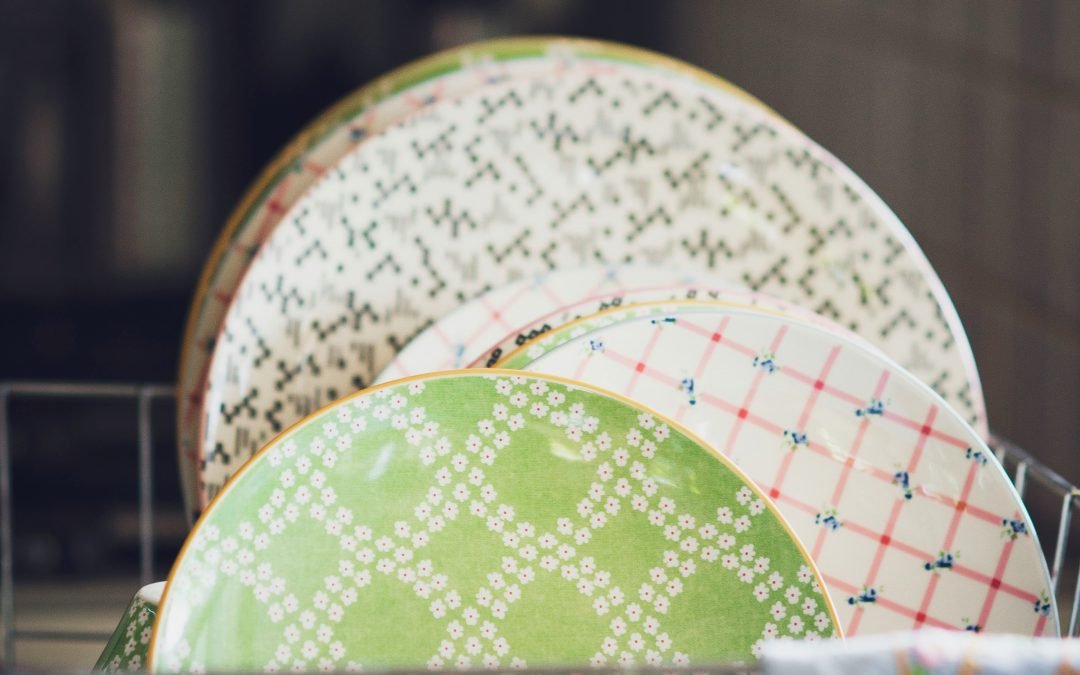
Photo By – Unsplash Tracy Hocking
by Sangeetha Vallat | Jul 11, 2025 | Musings, Today's Katha
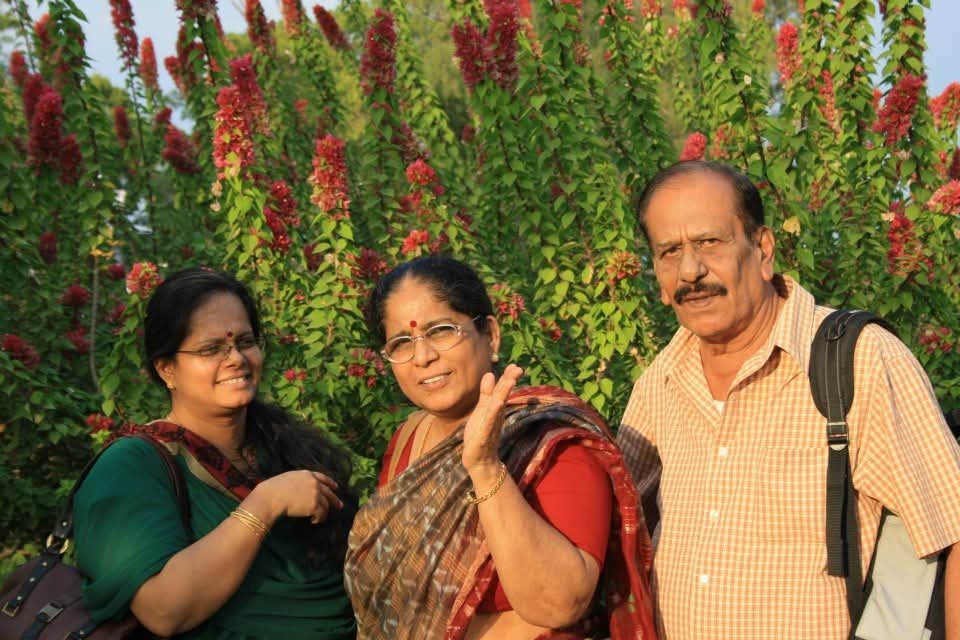
11 July 2025. My mom was my first friend. Growing up as a single child, I shared every thought, every detail of my life with my mom. The habit continues. As Oscar Wilde said, “Every woman becomes their mother…” Much to my delight and consternation, I can see that I am slowly transitioning into my mother. Hopefully, I will beget her strength and fortitude.
Finding Strength in Solitude: Voice Notes and Balcony Views.
When my father passed away in 2018, the silence he left behind felt deafening. As I prepared to return to Dubai, I asked my mother to come with me, just for a few months, to heal. But she surprised me with a quiet strength I hadn’t anticipated.
“No,” she said gently. “I’ll come later. I need to get used to being alone. Dubai will only be a temporary escape. If I go now and return to an empty home, it will be unbearable.”
Her clarity stunned me. I understood her reasoning and chose not to let others influence me with their well-meaning but intrusive suggestions and chorus of opinions: “Don’t leave her alone!”, “Why not stay longer?”, “This is what happens when children live abroad…” I trusted her instinct. She knew what she needed, and I respected that. I had to return to Dubai, to Sujith, and our life. And life, inevitably, had to move on.
Today, my mother lives alone in Chennai. We visit each other as often as we can, alternating between her home and ours in Dubai. We’ve even enjoyed a couple of mother-daughter vacations, where the roles subtly reversed, she, the curious child, and I, the protective parent.
Her daily voice messages are a constant in my life. They arrive in waves, updates, thoughts, musings from her day. When I’m in the middle of writing or caught up with chores, the barrage of messages can feel intrusive. I’ll play her voice in the background while doing something else, only to hear her ask later, “Why haven’t you replied?” I’ve snapped, said things I shouldn’t have, and quickly regretted it. Thankfully, neither of us lets such moments fester. We vent, move on, and return to everyday conversation, never letting arguments grow into monsters.
One of her favorite pastimes is sitting on the balcony of her 14th-floor apartment, watching life unfold below. Five years ago, one doctor insisted she needed immediate cataract surgery. Another said she didn’t have cataracts at all. Either way, she seems to have better eyesight than I do!
Every day, she narrates what she sees, a running commentary of everything she sees: a toddler wobbling around under a grandmother’s watchful eye, a mother escorting her daughter to tennis class while balancing twin toddlers on her hips, the eldest child dragging a tennis racquet behind. The occasional police jeeps or ambulances in the complex. She clicks pictures of the monkeys hanging on the door grill or prancing on the terrace and recounts their antics, all the while laughing uncontrollably. The area was once a mango orchard, but the trees were felled to make way for the high-rise apartments. So, the monkeys were in their habitat and refused to move away. Yesterday, she was particularly animated. The colleges have reopened, and our apartment complex, which sits beside a university, is buzzing again. Students are back, hanging around in groups, chatting, laughing, revving up their bikes. “The college kids are back!” she beamed. “It’s so lively! Remember that Prabhu Deva song about April and May! I feel exactly the same.”
I didn’t know whether to laugh or admire her joy. This childlike enthusiasm, this ability to find delight in the everyday, is her superpower. Living alone at her age isn’t something most would recommend, but she does it with grace, strength, and a sense of wonder that keeps her going.
She has taught me that healing doesn’t always come from company or distraction. Sometimes, it comes from sitting still, looking out from a balcony, and learning to be okay with your own company.
by Sangeetha Vallat | Jul 10, 2025 | Passport Pages
CHAPTER 4 KWAHERI (GOODBYE) KENYA
From Falls to Farewells: Wrapping Up Our Kenyan Adventure
To be honest, Thomson’s Falls didn’t quite live up to the hype. I’ve seen grander ones, and the constant presence of Maasai tribals and touts asking for a fee to click pictures dampened the charm. Word of caution, don’t be fooled by the friendly poses; there’s usually a price attached.
We had a long drive ahead to Nairobi, and as always, I kept Moses, our guide, company with a flurry of questions. At one point, I went quiet, and he instantly asked if everything was okay. That’s Moses for you, observant and kind.
Something curious caught my eye along the way. For the sixth time on this trip, I saw men lying prostrate on the roadside in a very specific “X” position – arms and legs splayed. My first thought: Are these drunkards passed out? It’s not an unusual sight in India, after all. But Moses explained something far more humbling. These were weary travelers, some of whom had walked for days, either searching for work or trying to sell their goods. When exhaustion hits, they simply collapse and sleep wherever they can. The unspoken rule? Don’t disturb them. Let them rest and continue their journey.
We passed through several counties- Nyeri, Laikipia, Kisumu (or was that near Masai Mara?), and Narok. The order blurred, but the landscapes never failed to charm. At Subukia County, we stopped at a Rift Valley viewpoint. We were traveling on the A104, a major highway in Kenya. Moses explained the road system: “A” for international trunk roads, “B” for national, “C” for primary, and so on.
Soon we hit a massive traffic jam and had to divert onto a dusty, chaotic off-road path. Vehicles formed four messy, self-created lanes with a few good samaritans stepping in to direct traffic. We crossed Kikuyu town, home to Kenya’s largest tribe. Kenya’s first President, Jomo Kenyatta, and his son, Uhuru Kenyatta, both belong to the Kikuyu community.
A stretch lined with towering Cypress trees came next. Moses shared that this area was once infamous for highway robberies. Thankfully, those days are long gone.
By late evening, we rolled into Nairobi, checked into our hotel, and headed straight to Carnivore Restaurant, a must-visit for any adventurous foodie. Think: chicken, lamb, beef, pork, turkey… and the exotics – crocodile, ostrich, and yes, ox balls. A feast fit for the wild-hearted. Bellies full, we slept like babies.
Originally, our plan was to visit the Masai Market, but we called the agency and paid extra to swap it out for something more exciting….The Giraffe Centre and David Sheldrick Elephant Orphanage.
Nairobi surprised us with its green and clean appearance. Sujith was curious about the city’s upscale neighborhoods, so we drove through Arboretum Road and Langata Road, passing the State House and some prominent universities along the way.
We considered visiting Bomas of Kenya (Bomas means homestead or livestock enclosure), a cultural center showcasing tribal dances and traditional homes, but with limited time, we made a mental note to save it for our next visit.
Our route took us to Karen, a leafy suburb named after Karen Blixen, the Danish author of Out of Africa, who lived here for 17 years, running a coffee plantation. Her expansive farmland is now home to universities and posh residences.
Along the way, we were delighted by the quirky, brightly painted Matatus – Kenya’s version of our Chennai “share autos,” only louder, more vibrant, and pulsing with music and energy. Packed to the brim, they truly are the lifeblood of local transport.
At the Giraffe Centre, we got to feed the elegant Rothschild Giraffes. A volunteer could identify each one by name and personality. I eavesdropped (okay, I joined in) on a guide’s talk to a group of British tourists and asked how giraffes eat thorny Acacia leaves. Turns out, giraffes are pros at navigating the thorns, and even if they get pricked, their saliva is antiseptic! Nature really thinks of everything.
I even clicked a picture of the giraffe list, names, ages, and all. What a charming bunch!
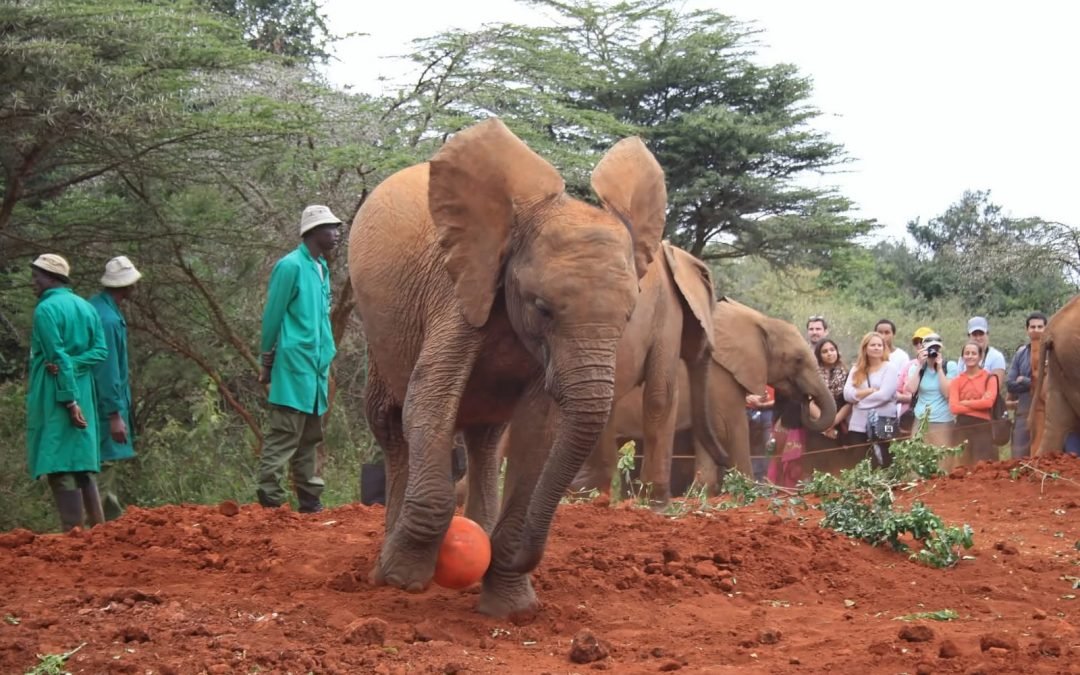
Next up was the David Sheldrick Elephant Orphanage, open to the public only between 12:00 and 1:00 pm feeding time! It was crowded, and I initially had to peek between the elbows and hips of two tall men in front of me. Thankfully, a kind woman moved, and I got front-row views of the adorable chaos. The baby elephants were splashing, rolling in the sand, and charging toward their milk bottles like toddlers to candy. They gulped the milk in seconds.
The staff shared stories about how each elephant ended up there, many rescued from poaching or abandonment. They explained the sponsorship process and how the elephants are rewilded once they turn three. We were there for nearly an hour, hearts full.
Lunch was a delightful Indo-Chinese fusion, and then it was time to head to the airport.
We exchanged numbers and email addresses with Moses, our fantastic guide, and thanked him for being such a significant part of this journey.
Kwaheri, Kenya
And just like that, my peregrinations came to an end.
However, not without one last twist….the airport lost our luggage, and we waited nearly two hours for it to arrive. Kenya clearly didn’t want our adventure to end!
This was more than a vacation; it was a memory etched in wildlife, landscapes, laughter, learning, and the warmest people. A trip that left us changed, even in the subtlest ways.
Farewell folks. Until next time.

by Sangeetha Vallat | Jul 10, 2025 | Passport Pages
CHAPTER 3 JAMBO FOLKS
From Acacias to Flamingos: A Journey Through Kenya’s Wild Heart
After a memorable stay at Siena Springs Camp, we packed our bags and hit the road toward Lake Elementaita. I claimed the front seat, camera in hand, firing away random questions at Moses, our ever-patient guide, who answered each one with enthusiasm and warmth.
As we drove, the scenery began to shift. The iconic flat-topped Acacias and Mara trees started to thin out, making way for the striking yellow-barked Acacia, also known as the fever tree or Naivasha thorn. These trees are fascinating; not only do they perform photosynthesis through their bark, but they also help maintain the water table. Local tradition holds that their roots, when brewed, help new mothers regain their strength after childbirth. We also passed by groves of whistling thorn acacias, trees that house ants in a fascinating symbiotic relationship. Take it from me: steer clear unless you want to get swarmed!
Soon, we reached Lake Naivasha, a freshwater gem and the highest-elevation lake in the Kenyan Rift Valley. Its name, Nai’posha in Maasai, means “rough water,” though on this particular day, the lake was anything but. It looked calm and still, almost serene. Our boatman, David, helped us aboard, and we set off across the water.
The lake was a haven for birdlife – huge pelicans struck dramatic poses, while ducks and geese floated by like royalty. Barren trees stood silently in the middle of the lake, and I couldn’t help but click away. My cousin teased me, saying my obsession with photographing trees against open skies was a classic “only child” trait. Maybe there’s some truth to it!
David gave us a heads-up and tossed a fish into the lake. Within seconds, a majestic eagle soared from a distant tree, circled above us, then swooped down and snatched the fish with incredible precision. This mini-show repeated a few times and never got old.
Then came the unforgettable moment- a bloat of hippos surfaced, their eyes, ears, and nostrils just peeking above the water. Although they’re herbivores, their sheer size and numbers made the moment spine-tingling. A few even emerged fully, as if striking a pose for our cameras.
Boating done, we continued to our overnight stop: Lake Elementaita Cottages. The lake stretched wide, bordered by misty mountains. Our cottage sat just 20 feet from the water’s edge, an idyllic spot if there ever was one.
However, lunch came with an unexpected guest: flies, zillions of them. They swarmed like mosquitoes, landing on our plates and faces. I had to eat with my mouth shut (Sujith probably appreciated the quiet). The hotel staff reassured us that they were harmless, but that didn’t stop one uncle from spraying mosquito repellent as if it were perfume. Caught in the spray zone, I was liberally sprayed upon. He turned to me, proudly pointing at his wrist gadget, and said, “This creates a safety zone. Africa is a dangerous place.” To be fair, it worked; we could finally enjoy our food.
We tried Ugali, a Kenyan staple made from maize flour. It reminded me of Karnataka’s Raagi mudde, though paler in color. Let’s just say… it was an acquired taste.
As the drizzle set in, we armed ourselves with a broken umbrella (from the cottage), camera, and binoculars, and walked along the lake’s edge. Across the water, flocks of pink flamingos shimmered in the distance, visible only through binoculars. They were expected to fly closer by morning.
And fly they did.
At dawn, we stood in awe as the flamingos drifted across the lake, their soft pink feathers glowing against the early light. The camera couldn’t do justice to the moment. Grebes floated nearby, and blue-spotted doves cooed from the cottage rooftops.
Next on our itinerary: the Equator Line and Thomson’s Falls, followed by an overnight stay in Nairobi. The drive from Elementaita took us through a series of small towns – Gilgil, Ntule, Kekiyoupe, and Nyandarua. The roads wound through barley and maize fields, children waved from the roadside, and local markets buzzed with life. Donkey carts ambled past, while colorful fruit and veggie stalls lined the streets. Fun fact: the tomatoes here are incredibly sweet, I genuinely considered buying for home!
I need to tell you my friends, the cacti here are so giant, they grow like trees. I was particularly attracted to one shaped like a candelabra, and Moses said it was called the candelabra cactus. I was thinking of a similar one planted in my home in a small pot, not giving it enough space to grow immensely!
Moses chuckled when I compared it to the poor, stunted one growing in a tiny pot back home.
Eventually, we reached Nyahururu town and Nandi County, home to the iconic Equator Line. We watched the classic experiment where water spins clockwise in the Northern Hemisphere and counterclockwise in the Southern Hemisphere, and stands still on the Equator. Tourists scrambled to film it, and yes, I got the certificate for crossing the Equator (you never outgrow souvenirs).
Sujith and I stood on either side of the Equator line, holding hands and laughing as others followed suit. After some hard bargaining and shopping for tribal art (my house is slowly becoming a mini-Africa), we ended the day with steaming chai and local banter.
Our final stop: Thomson’s Falls, where we would break for lunch and soak in the dramatic beauty of Kenya, once again.
Coming up next: Exotic meat tasting and milk-gulping elephants and thorn-tackling giraffes
by Sangeetha Vallat | Jul 10, 2025 | Passport Pages
CHAPTER 2 HAKUNA MATATA (NO WORRIES)
Into the Wild: A Day in the Masai Mara
Mambo (Wassup), everyone!
Our stay at Siena Springs Camp was as close to an off-the-grid experience as you can get. The camp runs its generator from 5 AM to 11 AM and again from 6 PM to 11 PM, meaning any action after dark or before sunrise happens in complete darkness. Naturally, that meant planning our day around generator hours, and with the best game drives happening early, we decided to head out by 6:30 AM.
Except… I may have misjudged the time.
Excited for the day ahead, I jumped out of bed when I saw the lights were on, and assumed it was 5 AM. I promptly woke up Sujith, only to realize it was still 4 AM. His glare could have lit the tent on its own. The generator had come on early, and my internal clock betrayed me!
We were ready on time, but our co-travelers made a fashionably late appearance, and we finally set off at 7:45 AM. Before entering the reserve, we paused for some photos at the gate and picked up a few souvenirs from the friendly Masai (also Maasai) traders. With the van’s roof popped up two feet, we were ready to stand and soak in every moment, strictly instructed not to get down until the drive was done. Six hours in the wild… my only worry? The bladder.
Almost immediately, we were surrounded by a “dazzle” of zebras. They posed effortlessly, some staring curiously, others completely ignoring us. I could have stared at them all day, but a few minutes was enough for my eyes to see the black and white striped pattern everywhere. Thomson’s gazelles darted by, petite, elegant, and shy. Elands stood motionless, lined up like schoolchildren being punished.
The landscape stretched endlessly. With a pair of binoculars we’d bought just before the trip, I tried adjusting the focus over my spectacles. Easier said than done on the bumpy ride! Moses, our guide, had near-telescopic vision, and he spotted creatures far in the distance. We saw Secretary birds striding through the grass, displaying their plumes, the Kori Bustard – the heaviest bird capable of flight, and a colourful Barbet on a bare tree branch.
Then came the king.
A lion, resting in the bushes. Distant, but majestic. Through the binoculars, it felt like he was right in front of me. Sujith and I traded places between the camera and the binoculars, thrilled at the sight.
But it was the wildebeest migration that truly took our breath away. Millions. Yes, millions of them blanketing the plains, moving in herds, grazing, roaming. No photo or video could do justice to the sheer scale of this “confusion” of wildebeest. It was nature’s drama at its finest.
Midday, we stopped for a picnic under a tree. The camp provided a packed lunch, and we munched on sandwiches while standing around the van. Moses found us a secluded spot for a quick loo break. A truly wild experience, imagine hiding behind a bush in lion country, just hoping nature doesn’t come calling in return.
Later, we spotted a lone elephant silhouetted against golden grass and blue skies, a living painting. Tall grass made it tough to approach, but the memory lingers. We reached the Masai River, the famous crossing point of the migration. Here, wildebeests face the jaws of crocodiles as they cross into the Serengeti. It’s nature at its rawest.
And then, tinkle time again. I begged Moses, who reluctantly let me out. Sujith stood guard (not sure if he was protecting me from predators or saving himself from my whining). Minutes later, just as we rolled away, we saw her: a lioness under a tree. Then another. And another. Soon, we were surrounded-seven lionesses, seven people in the van. A perfect, pulse-raising standoff. They lounged, uninterested in us. Perhaps they were full. Perhaps we weren’t appealing. We moved on, exhaling in unison.
Giraffes have always fascinated me – they are graceful, tall, and oddly elegant. Maybe my yearning for a few extra centimetres in height was why I liked this tall creature. I’d first seen them at Al Ain Zoo in the UAE, since there are none in the Chennai Zoo. The Masai Giraffes were stunning with their unique patterns. Watching them stretch their necks for acacia leaves or awkwardly spread their legs to graze was a gentle contrast to the wild drama we’d just witnessed.
The buffaloes, one of the Big Five, stood their ground with a lazy, intimidating stare. A cheetah rested on a nearby treetop, completely unbothered by the crowd of safari vans. Above, vultures circled ominously. We missed spotting a rhino this time, but hey, maybe next trip!
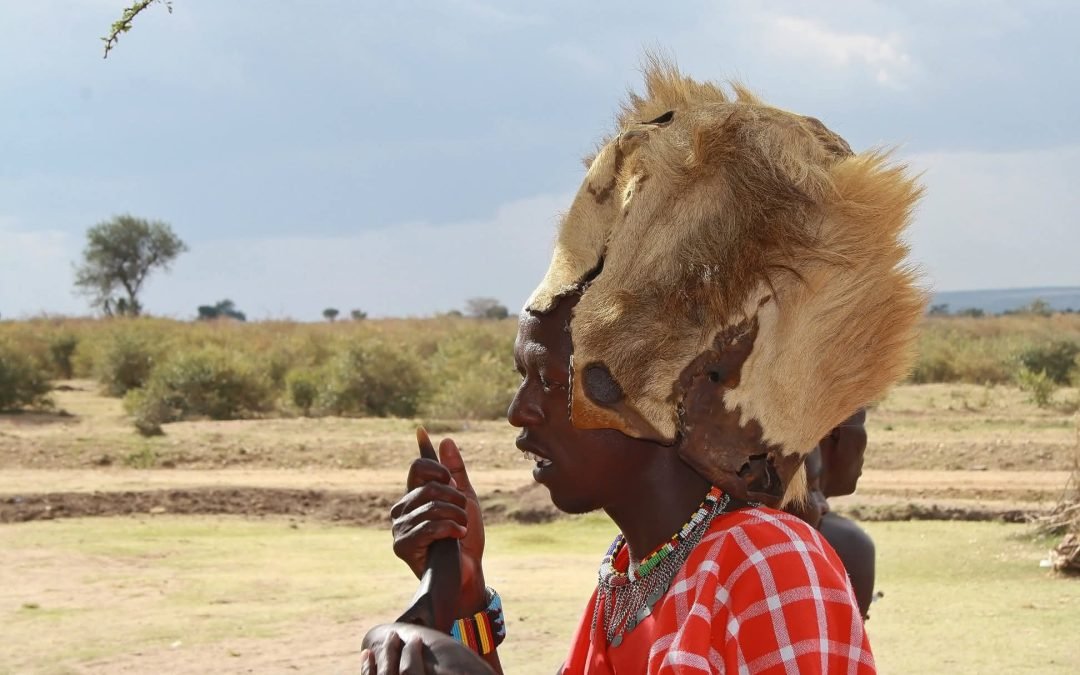
Our last stop before heading back was a Masai tribal village just outside the reserve. The welcome was warm and colorful. One man, wearing a lion’s mane, claimed he had killed a lion at age 10. “Folklore,” Moses whispered, smiling. But when I showed his photo to my young friend Parik in Dubai, his eyes sparkled. “He’s like the Black Panther!” he said. The man’s stick, he insisted, must be vibranium. Whatever!
The Masai men performed their famous jumping dance. We learned that the higher a man jumps, the more desirable he is as a groom, apparently, a key factor in winning a bride. Women sang joyfully, and I joined in a playful attempt to mimic their steps. The chief’s son explained their customs: multiple wives, dowries paid in cattle, and a tight-knit extended family structure. He would soon marry a girl chosen by his parents, and hoped to stick with one wife! He explained that the first wife was selected by his parents, but the rest were his wishes.
We purchased some handmade tribal artifacts before returning to camp, just as thunderclouds gathered. I managed to snap a few shots of the tents and surroundings before the skies opened up. Rain poured down, accompanied by thunder and lightning — a dramatic finale to an epic day. The chill, the sound, the wild energy, it felt like nature was putting on a show just for us.
As the raindrops drummed the canvas tent, we knew: the wildebeest were on their way to Tanzania, across the Masai river, and we had been lucky enough to witness their journey.
Coming up next: Falmingoes, flies, and dancing matchsticks.