by Sangeetha Vallat | Jul 10, 2025 | Passport Pages
We travelled to Kenya in August 2018, and I wrote this blog post in September 2018 when the memories were fresh. I jotted down info on my Samsung Notes during the trip. I had learnt a few Swahili words and exhibited my knowledge to the locals. Our guide, Moses, had answers to all my questions. Since the others in the van weren’t keen on sitting in the front seat, I hopped into the seat beside the driver, clicking pictures, pointing at trees, birds, animals, and buildings, and shooting questions. Sujith asked if I had plans to take up a job as a guide in Kenya. This travelogue is a 4-part series.
Chapter 1 KARIBU (WELCOME)
Into the Wild: From Dubai’s Glitz to Kenya’s Savannah
After the glamour-soaked high of Dubai, Jomo Kenyatta International Airport felt… ordinary. A cool breeze greeted us as we stepped off the flight, and already the contrast was stark. Living in Dubai spoils your sense of wonder; everything that isn’t gold-plated and gleaming feels underwhelming.
We were a group of 25: five Tamil-speaking couples with their energetic, snack-laden kids and the two of us. They were all neighbors back in Dubai and apparently, regular vacation buddies. At the arrivals, we were met by representatives from Sawa Sawa (which we learned means “OK OK” in Swahili), partners of Akbar Travels. A tall, dark man with an unpronounceable name gave us a welcome speech, laying out the rules and plans for the trip.
It was nearing lunchtime, and we had to wait for another group to land. The Tamil gang, ever generous, shared their chapatis and pickle with us. Kids equal snacks, and they had come prepared. We picnicked in the parking lot.
As we got ready to board the three minivans lined up for us, we were pulled aside. We’d be traveling with another couple, who would be arriving on a later flight from Dubai. Already tired from delays, the extra 1.5-hour wait did not improve our mood. We passed the time people-watching – jubilant groups of tourists streamed out of the airport, reminding us of Holden cars or pop bands (no relation, of course).
Our new companions arrived: a Malayalee couple with two kids. We were now complete.
Our driver, Moses, was a small, wiry man with an easy smile. The first thing I noticed? Crows. But not just any crows, these had white chests! Moses told us they were Pied Crows, or Corvus albus. Sujith gave me a knowing look. He knew I’d be testing our driver/guide’s patience with my curiosity. We took a few photos before beginning our journey to the Masai Mara National Reserve, approximately 280 km away, which is roughly a six-hour drive.
As we left Nairobi, I was glued to the window, capturing the stone buildings and suburbs with my camera. They resembled military quarters typically found in cantonments. The Malayalee family seemed disinterested, already half-asleep. But I was wide-eyed, soaking in every moment.
The Great Rift and a Greater Realization
We stopped at a viewpoint overlooking the Great Rift Valley escarpment near Mai Mahiu. The sign said it stretched from Israel to Mozambique—9,600 km. I couldn’t wrap my head around it. Such vastness! We clicked photos, browsed the curio shop (mostly just window shopping), and carried on.
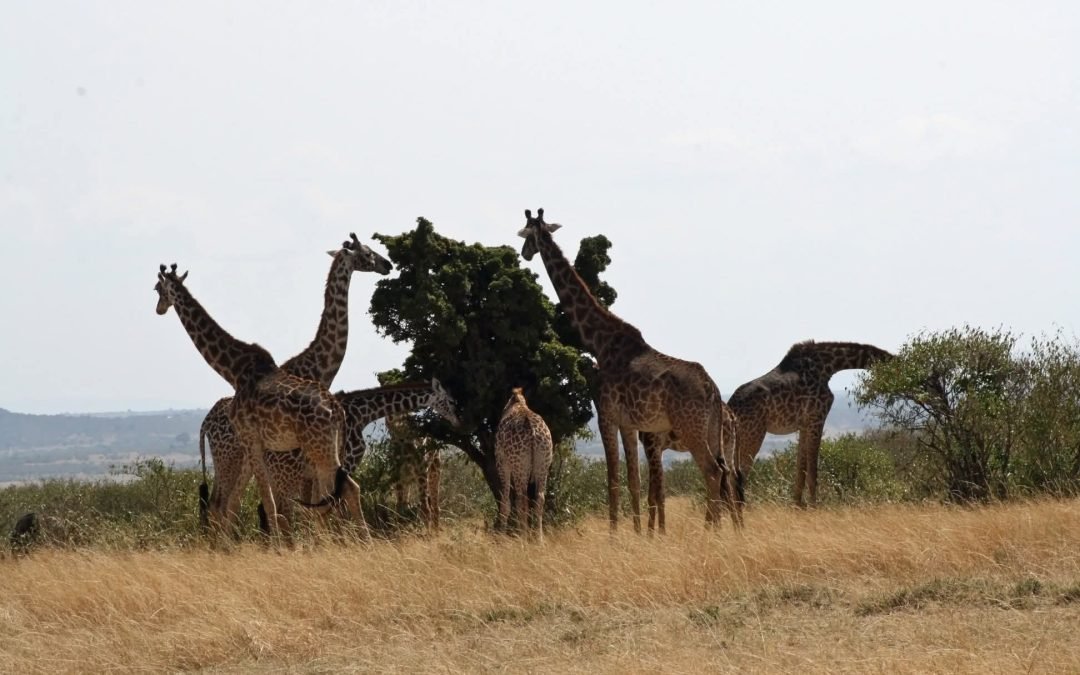
As we drove, the landscape shifted dramatically. The Savannah opened up in front of us…a golden straw-hued carpet dotted with flat-topped Acacia trees. Mountains framed the horizon, the dense forest a striking contrast to the open plains. Sheep danced across the fields, cows grazed lazily, and to our delight, giraffes made a casual appearance. I took a deep breath, clean, crisp, pollution-free air.
A strange-looking plant caught my eye. Moses told us it was the Agave sisalana, commonly called the Sisal tree. He had a degree in biology, which meant I got a bonus lecture (which I loved). He explained how sisal is used to make rope, mats, and bags. Young plants resemble a pineapple shrub, and as they grow, a tall stalk emerges with bushy, flower-like structures. Locals use them to mark land borders. (Yes, I Googled it later!)
The Final Stretch: Bumpy Roads and Bladder Battles
The last hour of our drive was brutal; there were no roads, just bumpy tracks. But Moses powered through like the biblical Moses parting the sea. It was near sunset, and by the time we entered the forested area, it was pitch dark. Our camp, Siena Springs, was supposed to be close… but in the absence of light or signboards, we were truly lost.
Then came my moment of crisis: my bladder gave out a distress call. I pleaded with Moses to stop, but he refused. “Too dangerous,” he said. Wild animals roam at night. But desperate times… I insisted, jumped out of the van with Sujith following, our very own till-death-do-us-part moment. The others closed the van doors and remained in place.
Eventually, after going in circles, we stumbled upon a workers’ lodge, and they guided us to our camp.
The Camp at Last: Under African Skies
The Siena Springs camp was straight out of a dream. Tents nestled in the jungle, a wooden deck, and a table for two outside. Inside, a cozy bedroom and a simple wash area. There was no electricity….just a generator that ran for a few hours, but I didn’t mind. Moonlight bathed the camp, and the only sounds were those of nature.
I worried about snakes and bugs, but was reassured. An electric fence surrounded the camp, and surprisingly, I didn’t spot a single insect. Dry season, I guess, they were on vacation too.
A hot shower and a Sawa Sawa dinner later, we collapsed into bed, sleeping like logs under the starry African sky. Exhausted, but already in love with Kenya.
Coming up next: Wildlife safari and sightings, and jumping Maasai.
by Sangeetha Vallat | Jul 9, 2025 | Musings, Today's Katha
I wrote this blog post in June 2019. Growing up as a single child, I looked forward to summer vacations where I could meet my cousins. We had such fun; indeed, they were golden days. Don’t you all have cherished memories of holidays with cousins?
Those Golden Days
Cousins are often our first friends, and I was blessed with a truckload of the very best. Born into a sprawling family on both my maternal and paternal sides, I have a lifetime of memories etched into my ever-fading memory bank. As an only child, my summers were a season of joy, spent soaking up the essence of siblinghood with my cousins.
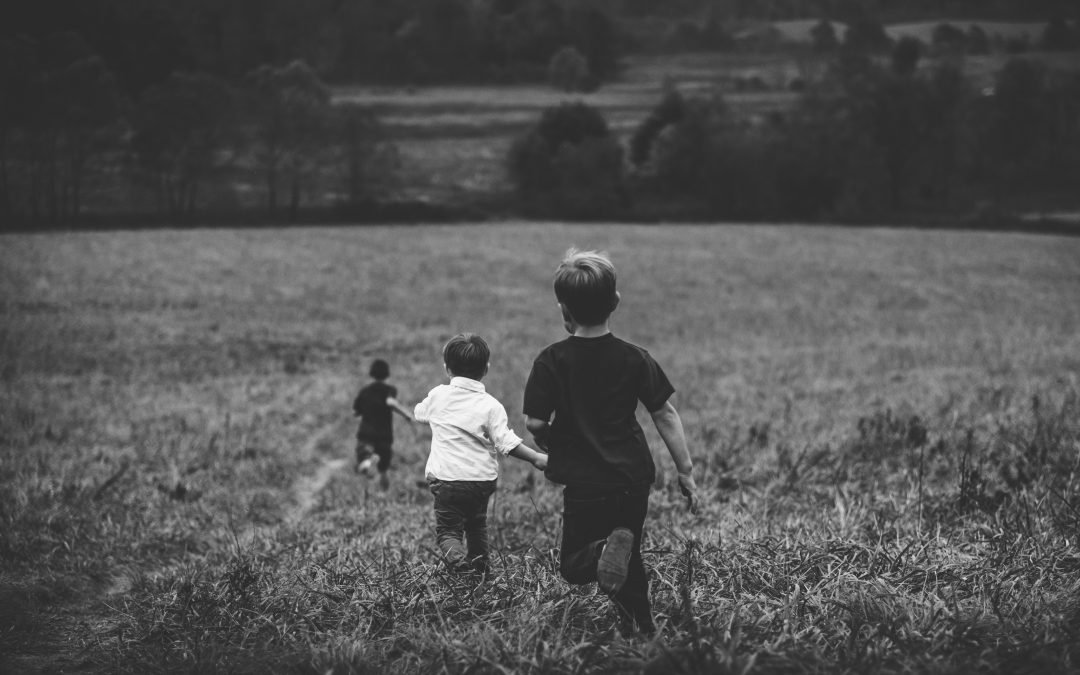
Growing up in the city, everything felt like it belonged to someone: mine, yours, his, hers. But stepping into our ancestral home, or tharavad, was a different story. There, everything was ours. The extensive landscape, the food on the table, the toys, the books, nothing had a single owner, and that’s what made it magical. With my Achan being one of 12 siblings and Amma one of 7, I had no shortage of cousins to bond with.
Summer vacations were split evenly, half spent in my mom’s tharavad, where only my grandparents lived, and the other half at my dad’s tharavad, where cousins from Bangalore would descend. My mom’s side of the family lived in Chennai, and we often met there. In the first half of my vacation, I read books, played with the neighbours and engaged in conversations with old people. There was a respected older man of our family who encouraged my outspokenness and chuckled at my stories. Although I enjoyed the quietness here, it was the second half of my vacation that I genuinely looked forward to. Achan’s home was always overflowing with aunts, uncles, cousins, and the gentle contrast between my tall, stoic grandfather and my petite, ever-smiling grandmother. Yet somehow, there was always room for everyone.
This tharavad sat in splendid isolation, overlooking an endless expanse of paddy fields. After harvest, the brown sun-baked fields would turn into our playground. If harvest was delayed, we pranced around the green paddy fields, taking care not to fall and damage the crops. Nature was our constant companion, with the whir of crickets, the croaking of frogs, shiny beetles buzzing toward tube lights, and even the occasional snake.
Mornings began with open-air chatter as we brushed our teeth under coconut trees, painting the ground white with foam. We’d collect fallen mangoes in the backyard, though grandma never stopped feeding us plate after plate of sliced mangoes. We watched cows being milked, giggled at the odd sensation of their warm, velvety necks, and ran wild under the canopy of trees. Our private pond, overgrown granite steps, and all were a favorite haunt. We’d link hands and wade in together, always under the watchful eyes of an adult. Sometimes we’d venture to the river, a grand expedition involving soaps, clothes, bundles, and a lot of splashing. I still remember the delight of learning to float in the arms of an aunt, even as my delicate skin broke into rashes from the muddy water.
Mealtimes were chaotic. The dining space rang with laughter, noisy banter, and the occasional special treat from a loving aunt, usually shared with a favorite cousin. Everyone had their “person”, an uncle who brought treats from work, an aunt who’d sneak you an extra laddu. My favorite was an uncle who’d ask each of us what we wanted, patiently collecting our long lists and returning with goodies by evening. We’d watch for him from afar, racing down the winding path through the fields to greet him and carry his bags.
Evenings slowly faded into nights filled with long shadows and eerie sounds. I’d cling to my dad, terrified of flying toads and ghost stories. My countryside cousins were braver, unfazed by snakes or frogs, and I admired them immensely. Long walks through the fields were a delight, plucking husked rice grains and gobbling them up as my cousin peeled them one by one. Even today, I can’t resist touching “touch-me-nots” when I spot them, no matter who’s watching.
We explored every nook and cranny of the tharavad, climbing into the attic to stare at the stuffed bull’s heads (some forefathers’ hunting prowess or a beloved pet), sift through dusty books, or admire the wall of wedding photos. We imagined our own wedding pictures joining the ranks one day.
Of course, we had our mischief too. When our unmarried uncles stepped out, we’d sneak into their bachelor quarters to ogle at Debonair, Playboy, and a few local Malayalam magazines, one of us always keeping watch across the fields.
Hide-and-seek was an adventure with so many secret spots to vanish into, sometimes so good we’d fall asleep unnoticed. We played “house,” fashioned bowls from teak leaves, and married each other with flower garlands. Rosary pea,(coral and black beads), “kunnikuru,” were our precious jewels. And oh, the countless trips to “Sajna Musicals” to record our selection of songs onto cassettes. I even befriended a shopkeeper near the bus stop, Chandran, who waited eagerly every summer to hear my wild stories. Even after I started working, I made time to visit him until he passed away a few years ago.
We had a local thatched-roof movie theatre that would restart the film just for us when we arrived late, thanks to my uncle’s popularity! A dozen of us would pile into an auto with snacks packed by grandma….Kerala banana chips and sweet halwa, and giggle our way through the ride. Didn’t we giggle and whisper too much with cousins and friends in our younger days? One cousin, fresh from Bangalore, once wailed for Gold Spot when all the theatre offered was Kappilandi (peanuts) and chaya.
Weddings were frequent and fun in the tharavad. With limited washrooms, a makeshift shed was built near the well. Bathing in pairs to save time often meant more laughter and less bathing. We have photos of all the women wearing the same red lipstick (courtesy of our Bangalore cousin), striking poses with the newlyweds while we expertly photobombed them. I secretly wished my wedding reception would be held right there, in the courtyard, with a paper plate of mixture and a cupcake balanced with a banana.
As we grew older, innocence slowly faded into caution. No more shared baths or hand-holding walks. But the bond only deepened as we whispered our secrets, first crushes, ambitions, and heartbreaks, late into the night.
Time flew. Cousins married, moved, and became parents. The old tharavad eventually crumbled, no more communal ownership, no more central hub. But the love we cousins shared never left.
Now, no matter where we are in the world, when we reunite, we slip right back into those golden days. A glass in hand, smile on our lips, we relive every moment, every prank, every silly fight and secret. We are still that same crazy bunch, just a little older.
P.S. Just got back from a road trip with my cousins, no spouses allowed. And what a riot it was!
Picture Courtesy – Unsplash- Jordan Whitt
by Sangeetha Vallat | Jul 9, 2025 | Fiction Bites, Short Stories
When BTB (Beyond The Box) Chronicles came up with a prompt in 2021, on Unconventional Friendships, I wrote this, based on my friends in Dubai. This story was featured in their Edition 7 in Aug 2021.
MUM’S THE WORD.
Shailaja hung on the door handle, tugged it twice before sprinting into the foyer. As the elevator clipped to her floor, she gazed through the mashrabiya. An ever-enthralling view – the tallest building in the world, a monument of steel and concrete towered imperially with its head in the clouds. The lift doors opened with a ding. Her thoughts hovered over her friends, who would have assembled already.
And she knew that they would not open their mouths until she reached.
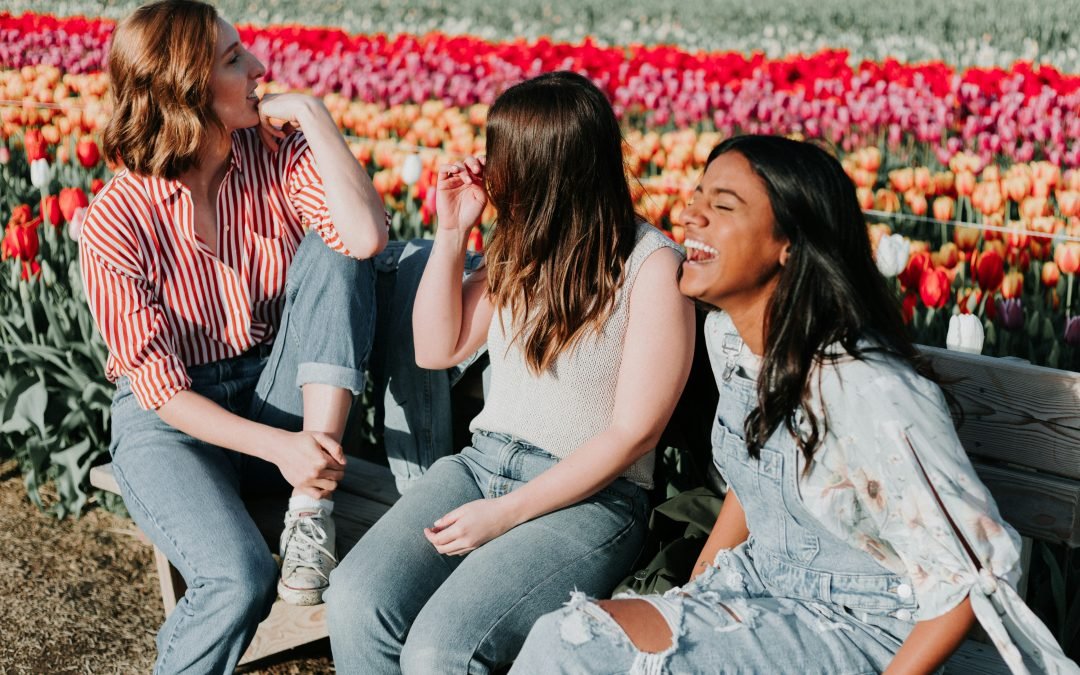
Shailaja, Benaifer, Mehroon, and Tahira met a few months ago at the playground. While their kids were swinging and sliding, the women smiled and nodded at each other.
Shailaja linked her palms in Namaste and spoke in English, “Hello. I am Shailaja from India.”
Mehroon’s burka flapped as she clucked, “Ah, I from India. English no. Malayalam.”
Shailaja, a Malayalee from Mumbai, not very conversant in her mother tongue, managed to string words together. She assured Mehroon that conversation was possible without English.
Benaifer and Tahira mumbled a flaccid hello. They furrowed their brows at the two women chattering in a strange nasal twang.
Benaifer, from Karachi, chirped in Urdu, and Tahira, from Cairo, spouted only Arabic. Shailaja managed to converse in Hindi with Benaifer, and her love for acting, which she had developed since school, aided her in enacting the conversation with Tahira.
When Mehroon drawled a sentence in Malayalam, Shailaja decoded it into Hindi, which Benaifer grasped. Getting through to Tahira posed a challenge. She scratched her mauve hijab, staring at her three friends gesticulating in a frenzy. After a few unsuccessful attempts, they reached a mutual agreement. Shailaja would pantomime, and the others would not interfere.
Every evening, the foursome convened at the playground. It then slowly branched out into visiting homes. They scheduled their recipe swapping session for noon on Wednesdays. Today, the meeting was held at Benaifer’s house, where she prepared a Pashtun Chapli Kebab while the ladies took notes.
Shailaja hoped the twins stayed asleep. Their exhausted nanny enjoyed the diversion of the ‘funny women’ as she had christened them. The twins were the latest addition to Benaifer’s swelling breed. Benaifer’s salwar had flaps stitched into them, for her breasts perpetually had a baby dangling from them.
Last month, everyone relished Shailaja’s Mumbai Pav Bhaji and Mehroon’s Malabar Pathiri and Chicken Curry.
The class at Tahira’s turned out to be an adventure. Deciphering the ingredients, such as ‘mulukhiyyah’, by looking, touching, biting, or googling, was an ordeal. Halfway through the process, Tahira put the ladle down, pushed the ladies onto the couch of her cramped studio apartment, and switched on the television, where they watched a drama in Arabic without subtitles. Tahira wrapped up the dish. The soup and the vine leaves were delicious.
So, without Shailaja, not a tongue will move other than to greet – Salaam Alaikum and Walaikkum Assalam. She needed to be there at Benaifer’s for the mutton to cook.
Can you imagine three women sitting silently?
An Oxymoron indeed!
***
Glossary
Mashrabiya – Lattice work.
Burka – An outer garment worn by Muslim women.
Hijab – The cloth covering the head/hair by Muslim women.
Pashtun Chapli Kebab – A lamb dish
Mumbai Pav Bhaji – Bread and Vegetable Curry.
Malabar Pathiri – A type of bread/roti.
Mullukhiyah – Egyptian Spinach.
Salaam Alaikum & Walekkum Assalam – Greetings in Arabic.
Picture Courtesy- Unsplash – Pricilla Du Preez

by Sangeetha Vallat | Jul 9, 2025 | Fiction Bites, Short Stories
I wrote this in July 2022 in response to a prompt on The Story Cabinet app and won a cash prize.
A CARDINAL SIN
Parvati sucked her breath and grabbed the doorknob, praying that it would not creak. Twisting it open, she peeped into her parents’ bedroom. The waxing crescent spilled pale light, contouring the supine snoring figures. She closed the door and slinked out of the house with a bag slung on her shoulder.
A faint wind moaned through the trees, and echoes of a howling dog rent the air. Parvati wrapped a shawl tightly around her shoulders and hastened to the usual haunt of their clandestine meetings.
She waited, wringing her hands, and listening to the chatter of cicadas accompanied by a frog’s plaintive melody. The grey clouds fleeted over the moon, cloaking the woods in gloom. Parvati slumped on a rock, peeling a cuticle from her index finger, and watched the fluid smirching her nails. Moisture clung to her eyelids.
In the northern corner of the village, Ilyas pedalled his bicycle furiously, berating himself for the delayed delivery of meat. He required the extra cash to begin a new life with his angel. The strap of his Bata slipper snagged to the cycle pedal and hung out on a limb for its dear life. Ilyas flung both his slippers without pausing his momentum.
Just then, a covey of men huddling on the skirts of the forest pounced onto the path and halted Ilyas. He clutched the brakes. It splintered, the cycle skidded, and Ilyas catapulted to the forest floor. The brambles drew blood, scouring his skin.
“You didn’t find any girls in your community to elope? Misleading our young ones with vacant promises!” The gang leader pulled Ilyas from the ground.
“Did you think we were spineless fellows?”
Ilyas flapped his eyelids. His muted protests fell on deaf ears. The men had passed the verdict without hearing the defendant’s plea.
Parvati’s cousin, to be precise, her fiancé since birth, lobbed the first punch. Blood squirted from the broken nose, and a wail erupted from Ilyas. The cruor mottled his white shirt. Ilyas coiled into a ball, shrinking as a volley of blows and kicks plagued him.
“Hand me the can. This will teach these scoundrels a lesson!” Yelled the stout priest.
“Do we need to do that?” Pleaded the schoolmaster.
“This pig asked for it. Move over, master.”
The priest tipped the can of kerosene over the doomed lover while the cousin peeled the wad of money from Ilyas’s wet pocket. Then, cramming it in his shirt, he lit a cigarette and flicked the match on his rival.
Jubilant over a job well done, the self-proclaimed custodians of sanctity dissolved into the darkness.
When the birds resting on treetops began to stir, Parvati heaved a sigh. The sun began to spread its tentacles, splotching the sky in orange and pink. Acrid fumes crept from the farthest side of the woods.
Carved with grief, Parvati trudged back home, lacerating her mind for reasons. Unable to swallow that those declarations of eternal love were empty promises.
Picture Courtesy – Unsplash – Alexandre Boucey

by Sangeetha Vallat | Jul 9, 2025 | Fiction Bites, Short Stories
Fathers and daughters share a special bond. In 2021, when an anthology was seeking short fiction for the ‘Grieving and Healing’ anthology, I wrote this, remembering my Achan, whom I miss. Everyday. He pampered me and never raised his voice. My friends, who once teased his crazy love for me, now reach out to me, saying that they are imitating my father; they have daughters whom they pamper and adore.
SOME THINGS NEVER CHANGE.
I see my mother talking to a lady, and I walk across the hall to join the conversation. Children circle the table nearby where a Monopoly board game is in progress. A clamour breaks out, and someone rushes to manage the unruly brats.
While my mother discloses her special recipe, my mind and gaze wander towards the other guests—a motley bunch. Animated conversations whip around me.
A girl in pigtails runs to us. “Mamma, I want water.”
My mother’s recipe captivates her mamma, and the daughter’s plea falls on deaf ears.
I can see a jug of water at arm’s length of the girl, a tween who is capable of picking up the pitcher to drink. But she refuses to quench her thirst and stares at my gesticulating mother. I do not suggest that the girl pick up the water jug. I am wary of youngsters. She may scream, ‘mind your own business’.
I do just that.
The next instant, the girl’s father swoops in like a genie, “Baby, I will get you water.” He finds a glass, tips the jug, and offers it to his daughter. Then twirls his stubby finger on her stray curls and tucks them behind her ears.
Why can’t the girl pour herself a glass of water instead of expecting her parents to do it for her? And the father dashes from across the hall to do her bidding. I chew on my thoughts.
Uncannily, my mom reads my mind, and her lips curl up. Soon, I can see the thing staring at me. My father would have darted to my side to hand me a glass of water and smothered me with his attention, love, and adoration. I would have persisted like that girl in pigtails – Forever Daddy’s Little Princess.
The moisture in my eyes threatens to fall. I miss my Achan. A silent presence in my life, invariably supporting me against all odds.
My mother relentlessly complains that I take after my father. That none of her genetic material has seeped into me.
I am proud to be my father’s daughter.
A plethora of memories unspool – the ritual Achan followed, by waiting at the gate until I returned after work, and how Achan would stay by my bedside if I were unwell, how Achan gulped his resentment when I returned home late after the movie with friends, and the cigarettes Achan smoked when I went through labour. Especially the camaraderie Achan shared with my husband…
I see my husband on his knees listening to our daughter’s babble.
Some things never change.
Fathers and daughters – an incredible bond that never fades. My father lives on in all the fathers of daughters.
Picture Courtesy – Brittani Burns